

Table of Contents
- What Are Probiotics and Prebiotics?
- Key Differences Between Probiotics and Prebiotics for Children
- Best Fiber-Rich Foods for Toddler Digestion
- Signs a Child Needs a Probiotic
- How Probiotics and Prebiotics Work Together
- How to Choose a Children's Probiotic
- Safety, Side Effects, and When to Supplement
- Frequently Asked Questions
What Are Probiotics and Prebiotics?
Understanding probiotics and prebiotics for children explained is key to supporting your child's digestive health. These two work differently but serve complementary roles.
Probiotics: Live Beneficial Bacteria
Probiotics are live microorganisms that support gut health. When your child swallows a probiotic, these beneficial bacteria travel to the digestive tract and take up residence in the gut microbiome. Common bacterial strains include Lactobacillus and Bifidobacterium.
Probiotics are the "good guys" that crowd out harmful bacteria, support immune function, and aid nutrient absorption and digestion.
Parents often give probiotics during antibiotic courses because antibiotics kill beneficial bacteria too. Probiotics help repopulate them afterward.
Prebiotics: Food for Gut Bacteria
Prebiotics are non-digestible carbohydrates that feed beneficial bacteria. Your child's body can't break down prebiotic fiber, but the good bacteria in their gut can. This is the key difference: probiotics are the bacteria themselves. Prebiotics are the food those bacteria eat.
Common prebiotic fibers include inulin and fructooligosaccharides (FOS). You'll find these naturally in foods like bananas, garlic, onions, and asparagus. When your child eats these foods, the beneficial bacteria in their gut ferment the fiber and grow stronger.
Prebiotics increase microbial diversity, supporting better digestion and immune response. Many children lack sufficient fiber for beneficial bacteria to thrive.
Key Differences Between Probiotics and Prebiotics for Children
The main distinction between probiotics and prebiotics for children explained comes down to source and function. Probiotics are living organisms. Prebiotics are food for those organisms.
Here's what sets them apart:
Aspect |
Probiotics |
Prebiotics |
|---|---|---|
What They Are |
Live beneficial bacteria |
Non-digestible fiber |
How They Work |
Colonize the gut microbiome |
Feed existing beneficial bacteria |
Common Sources |
Fermented foods, supplements |
Whole grains, fruits, vegetables |
Time to Work |
Days to weeks |
Days to weeks |
Best For |
Restoring balance after antibiotics |
Supporting long-term gut health |
Probiotics introduce new bacteria; prebiotics feed existing bacteria. A child's gut improves fastest with both. Without prebiotic fiber, probiotic bacteria won't establish themselves, they need food to survive. This is why synbiotics (products combining both) matter.
Best Fiber-Rich Foods for Toddler Digestion
Many everyday foods naturally support gut health. Start with foods your child already likes:
- Bananas, soft, naturally sweet, and packed with prebiotic fiber
- Sweet potatoes, creamy texture, mild flavor, loaded with fiber
- Avocado, buttery texture that many kids love, full of healthy fat and fiber
- Berries, small, easy to grab, and naturally sweet
- Whole grain toast, familiar format, easy to add to meals
- Cooked carrots, soft enough for young kids, slightly sweet
- Peas, small, fun to eat, and full of fiber
- Oatmeal, creamy, customizable, supports digestive health
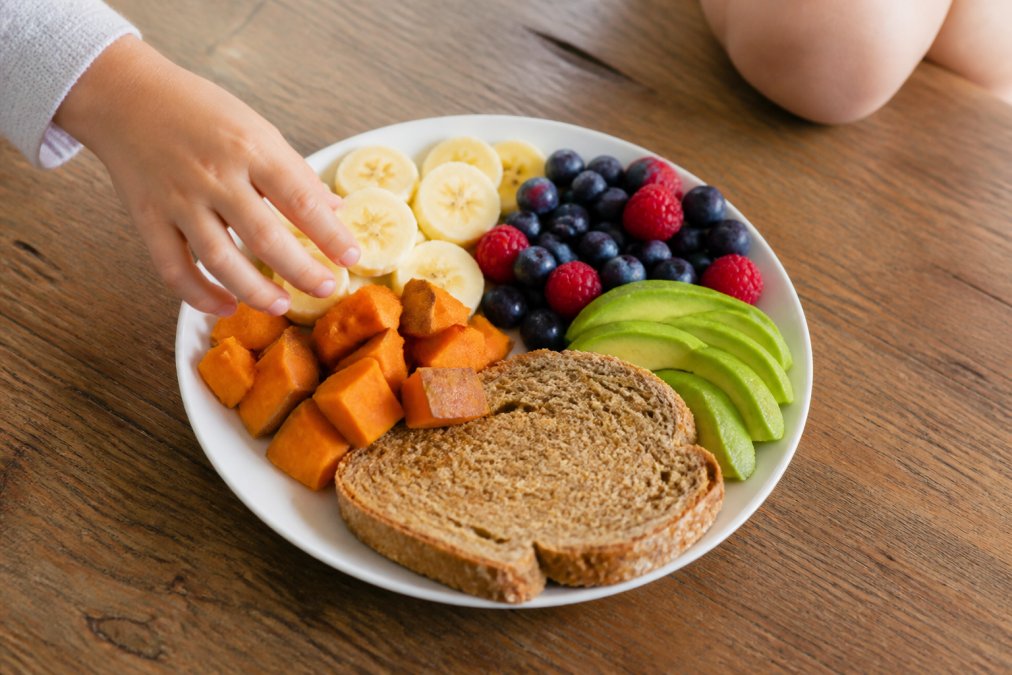
Consistency matters: add these foods regularly so gut bacteria adapt. For picky eaters, mix fiber-rich foods into familiar dishes, mash sweet potato into mac and cheese, blend berries into yogurt, or add mashed avocado to chicken nuggets.
Signs a Child Needs a Probiotic
Not every child needs a probiotic supplement. Certain situations suggest your child might benefit, but distinguish normal digestive variation from genuine gut imbalance.
When a probiotic is clearly indicated:
- Recent antibiotic use, Antibiotics kill 30-50% of gut microbiota. Probiotic support within 2-3 hours after each antibiotic dose helps repopulate beneficial strains before harmful bacteria colonize the space. This is the strongest evidence-based use case.
- Persistent diarrhea lasting more than 2 weeks, Diarrhea beyond 2 weeks, particularly after antibiotics, suggests dysbiosis. Saccharomyces boulardii or Lactobacillus rhamnosus may help restore balance.
- Diagnosed food sensitivities or intolerances, A weakened gut barrier allows undigested food particles to trigger immune responses (bloating, skin reactions, behavioral changes). Lactobacillus plantarum supports intestinal barrier integrity over 4-8 weeks.
- Eczema or other atopic conditions, If your child has diagnosed eczema and poor digestion signs, a probiotic may support immune tolerance over 6-12 weeks.
When symptoms are likely normal and don't require intervention:
- Occasional constipation, Bowel movements every 1-3 days with soft stools are normal. Constipation is a concern only when stools are hard, infrequent (less than once every 3 days), or painful.
- Bloating after high-fiber foods, Mild bloating from fiber fermentation is normal digestion and resolves within hours.
- Mild, occasional gas, Normal and a sign of a working microbiota. Excessive gas (multiple times per hour with discomfort) differs from normal function.
- Loose stools during illness, Viral infections commonly cause loose stools for 3-5 days. Probiotics during acute illness aren't necessary; wait until the illness resolves.
Red flags that warrant pediatrician evaluation (before starting probiotics):
- Blood or mucus in stools
- Severe abdominal pain or cramping
- Weight loss or failure to gain weight
- Fever lasting more than 3 days
- Signs of dehydration (dry mouth, fewer wet diapers, lethargy)
- Symptoms that worsen despite dietary changes
These may indicate infection, inflammatory bowel disease, or other conditions that require medical diagnosis before supplementation.
Timeline for results depends on the issue: After antibiotics, expect improvement in 3-7 days. For chronic constipation or bloating, 2-4 weeks.
How Probiotics and Prebiotics Work Together
Probiotics and prebiotics work best as a team (called a synbiotic). Probiotic bacteria need prebiotic fiber to survive and multiply. The bacteria ferment fiber, producing short-chain fatty acids that support the intestinal lining and immune response. Without prebiotics, probiotic bacteria struggle to establish themselves. Without probiotics, prebiotic fiber may feed the wrong bacteria if the microbiota is imbalanced.
The best approach combines both:
- Start with a probiotic if your child just finished antibiotics or shows signs of gut imbalance
- Add prebiotic foods within the first week, bananas, sweet potatoes, oats, berries
- Maintain both long-term for sustained gut health
How to Choose a Children's Probiotic
Not all children's probiotics are created equal. Quality varies widely, and what works for a 2-year-old differs from what works for an 8-year-old. Here's what to look for when choosing a probiotic for your child.
Match the CFU count to your child's age:
- Infants (0-12 months): 1-5 billion CFUs per dose (use strains like Bifidobacterium infantis)
- Toddlers (1-3 years): 5-10 billion CFUs per dose (powder formulations work best)
- Preschool and school-age (4-12 years): 10-25 billion CFUs per dose
- Adolescents (13+ years): 25-50 billion CFUs per dose
Choose strains based on your child's specific need:
- For antibiotic recovery: Lactobacillus rhamnosus GG and Saccharomyces boulardii show improvement in stool consistency within 3-7 days.
- For constipation: Bifidobacterium longum and Lactobacillus plantarum increase stool frequency and soften consistency.
- For diarrhea: Saccharomyces boulardii and Lactobacillus rhamnosus GG reduce duration and severity.
- For immune support: Lactobacillus rhamnosus GG and Bifidobacterium breve reduce infection frequency over 6-12 weeks.
- For eczema or allergies: Lactobacillus rhamnosus GG and Bifidobacterium longum support intestinal barrier function.
- For general gut health: A multi-strain formula with 2-4 strains supports microbial diversity better than single-strain products.
Verify third-party testing:
Choose a delivery format your child will actually take:
- Powders: Mix into applesauce or yogurt; easy for toddlers but sensitive to heat and moisture.
- Capsules: Swallowable by most children age 6+; downside is younger children can't swallow them.
- Gummies: Easy to take but often contain added sugar and may damage bacteria during chewing.
- Liquids: Pre-mixed but have shorter shelf lives and are prone to bacterial die-off if not refrigerated.
Check the expiration date and storage requirements:
Safety, Side Effects, and When to Supplement
Probiotics are generally safe for healthy children. But they're not risk-free for everyone. Understanding when to use them and what to watch for matters.
Frequently Asked Questions
What's the main difference between probiotics and prebiotics for children?
Probiotics are live beneficial bacteria that directly support your child's gut microbiota. Prebiotics are non-digestible fibers that feed those bacteria, helping them thrive. Think of probiotics as the soldiers and prebiotics as their food supply. Both matter for a healthy digestive tract and immune system support in children, and they work best together.
Can children take both probiotics and prebiotics at the same time?
Yes, children can safely take both together. In fact, combining them creates what's called synbiotics, which research suggests may be more effective than either alone. Many whole foods naturally contain both—bananas and oats have prebiotics, while fermented foods like yogurt provide probiotics. If supplementing, check with your pediatrician about timing and dosage for your child's age.
How do I know if my child needs a probiotic supplement?
Signs a child needs a probiotic include frequent digestive issues like constipation or loose stools, bloating, or persistent stomach discomfort. Recent antibiotic use, food sensitivities, or high stress can also indicate an imbalanced gut flora. However, many healthy children get enough beneficial bacteria from fermented foods and whole foods with dietary fiber. Consult your pediatrician before starting any supplement to determine if your child would benefit.
Are there side effects when giving children probiotic supplements?
Most children tolerate probiotics well, especially from food sources. Some may experience mild digestive changes like temporary bloating or gas as their gut adjusts. These effects usually pass within a few days. Choose supplements with well-researched bacterial strains like Lactobacillus and Bifidobacterium, and start with a lower dose to minimize adjustment. Stop and consult your pediatrician if your child experiences severe symptoms or allergic reactions.


Leave a comment
This site is protected by hCaptcha and the hCaptcha Privacy Policy and Terms of Service apply.