
Table of Contents
- 1. Feed the Microbiome with the Best Fiber-Rich Foods for Toddler Digestion
- 2. Add Probiotics for Toddlers: Benefits, Fermented Foods, and Kefir
- 3. Cut Back on Processed Foods and Added Sugar
- 4. Grow Plant Diversity on the Plate
- 5. Make Hydration and Water Intake a Daily Habit
- 6. Recognize the Signs of Unhealthy Gut in Toddlers Early
- 7. Support the Gut-Brain Axis with Routines, Textures, and Outdoor Play
- Conclusion: Small Daily Wins Build a Healthier Gut
- Frequently Asked Questions
1. Feed the Microbiome with the Best Fiber-Rich Foods for Toddler Digestion
Fiber is the single most underrated tool in a parent's gut-health playbook, and it is the fastest place to start improving toddler gut health. Fiber feeds the beneficial bacteria already living in your child's digestive tract, helping them produce short-chain fatty acids that keep the gut lining strong and inflammation low. The American Academy of Pediatrics guidance on fiber for children notes that most young children fall short of the fiber they need, largely because the foods they eat most often are the ones with the least of it.
The practical fix is not a supplement or a special diet. It is choosing fiber-rich foods your toddler will actually accept, then repeating them often enough that they become normal.
Best fiber-rich foods for toddler digestion:
- Raspberries and blackberries, which toddlers treat as a treat
- Oatmeal, cooked soft and topped with fruit
- Cooked lentils or black beans, mashed into a sauce or patty
- Sweet potato, roasted or pureed
- Whole-grain toast cut into strips
- Pear with the skin on, diced small
 Stealth Health: Getting Fiber Into a Picky Eater
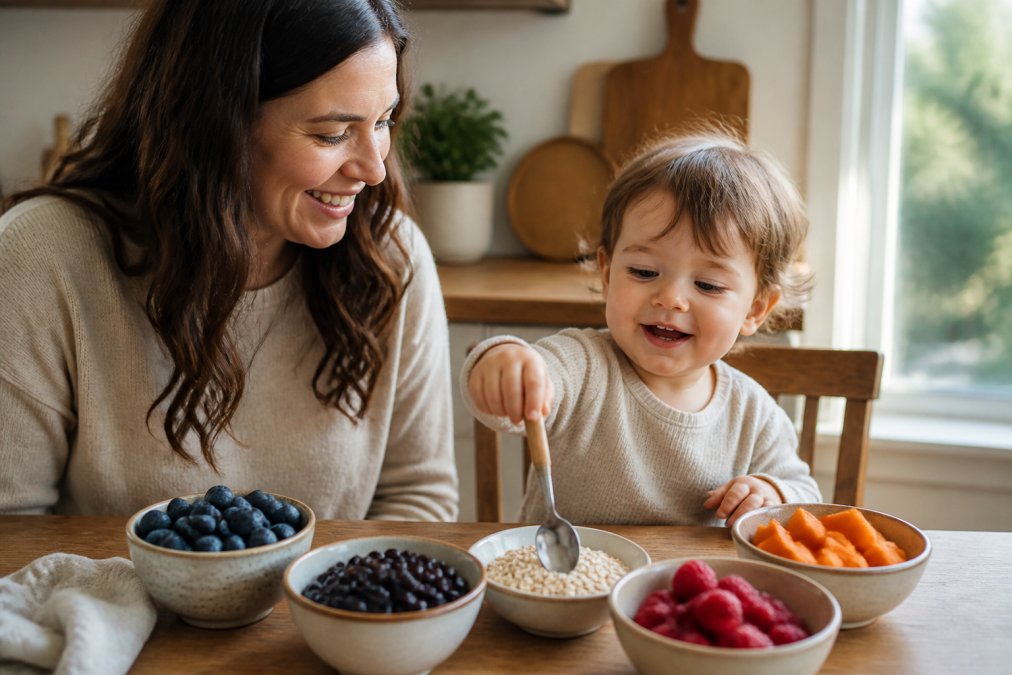
Most guides stop at the food list. The real problem is that the toddlers who need fiber most are often the ones who refuse it. Here is where the 'stealth health' approach earns its keep, hiding fiber inside foods your child already trusts, without changing the taste or texture they have signed off on.
Concrete swaps that add fiber without a fight:
- Pancakes and waffles: Replace up to one-quarter of the flour with finely ground oats or oat flour. The texture stays close enough that most toddlers never notice.
- Pasta sauce: Stir a half-cup of mashed white beans or lentils into a jar of marinara. The color barely shifts and the flavor is masked by the tomato.
- Meatballs and patties: Mix cooked, mashed lentils into ground meat at roughly a 1-to-3 ratio. They hold together and taste like the meat.
- Yogurt: Stir in a spoonful of chia seeds and let them sit for ten minutes. They soften and disappear into the texture.
- Smoothies: Blend a handful of spinach or a half-cup of cooked carrot into a fruit smoothie. The fruit flavor dominates.
- Baked goods: Add pureed pumpkin, sweet potato, or applesauce to muffins and quick breads in place of some of the oil.
The repetition rule: A toddler may need to see a new food 10 to 15 times before accepting it. That number is not a reason to give up, it is the reason stealth tactics work. You are not asking for acceptance on the first try; you are building familiarity in the background.
How Much Fiber Does a Toddler Actually Need?
A commonly used rule of thumb is about 5 grams of fiber per day plus your child's age in years. That puts a 2-year-old at roughly 7 grams and a 3-year-old at about 8 grams. For context, a half-cup of cooked oatmeal delivers about 2 grams, a half-cup of raspberries about 4 grams, and a half-cup of mashed black beans about 7 grams. Hitting the target is less about one big fiber push and more about stacking small amounts across the day.
Go slowly. Adding a large amount of fiber at once, especially without enough water, can cause gas, bloating, and constipation, the opposite of the goal. Increase gradually over a week or two and pair every fiber increase with extra fluids.
2. Add Probiotics for Toddlers: Benefits, Fermented Foods, and Kefir
Probiotics for toddlers benefits show up fastest when they come from food rather than a pill. Probiotics are live microorganisms that add to the beneficial bacteria in the gut, and fermented foods deliver them alongside the nutrients that help those bacteria survive. The NIH Office of Dietary Supplements overview of probiotics explains that different strains do different jobs, which is why variety across foods tends to work better than one repeated product.
Yogurt, Kefir, and Other Fermented Foods
Plain yogurt and kefir are the easiest starting points because most toddlers already like them. Look for versions with live and active cultures and no added sugar. If your child finds kefir too tangy, blend it into a smoothie with banana. Other fermented foods, like plain cottage cheese or a spoonful of sauerkraut juice, work for some kids and not others, so treat this as trial and error.
3. Cut Back on Processed Foods and Added Sugar
Added sugar and heavily processed foods do not just add empty calories; they shift the balance of gut flora in the wrong direction. Many parents find that the biggest wins come from subtraction rather than addition. Swap sweetened yogurt for plain, replace juice with water, and read labels on crackers and granola bars, where added sugar hides most often.
The goal is not perfection. A toddler who eats mostly whole foods and occasionally has a cookie is in a very different place than one whose daily diet is built on packaged snacks. Small, consistent reductions add up faster than a strict overhaul that no one can sustain.
4. Grow Plant Diversity on the Plate
Bacterial diversity in the gut tracks closely with plant diversity on the plate. A toddler eating the same five foods every week gives their microbiome the same five inputs. Adding one new plant food per week, even in small amounts, broadens that base over a season.
This does not require exotic ingredients. Rotate through different colored vegetables, different grains like oats, barley, and quinoa, and different legumes. Serve them alongside familiar foods rather than replacing them, and expect to offer a new food many times before it is accepted. Rejection on the first try is normal and not a signal to stop.
5. Make Hydration and Water Intake a Daily Habit
Water intake supports bowel regularity and helps fiber do its job. Without enough fluid, a fiber-rich diet can actually make constipation worse, which is the opposite of what most parents expect. Offer water with meals and between them, and keep a cup within reach during play.
Milk and juice are not substitutes here. Juice in particular delivers sugar without the fiber that would slow its absorption. If your toddler resists plain water, a fun cup or a splash of fruit in the water often solves it. Track it loosely rather than measuring every ounce; the pattern matters more than the exact number.
6. Recognize the Signs of Unhealthy Gut in Toddlers Early
Signs of unhealthy gut in toddlers are usually behavioral and digestive, not dramatic. The most common ones parents report are frequent constipation or diarrhea, excessive gas, bloating after meals, and a pattern of loose, foul-smelling stools. Reflux that persists well past infancy is another signal worth raising with a pediatrician.
Behavioral signs matter too. A toddler who is unusually irritable, sleeps poorly, or has frequent unexplained rashes may be dealing with gut inflammation rather than a phase. None of these signs on their own confirms a problem. What matters is the pattern: several of them together, lasting more than a couple of weeks, is the point at which a conversation with your child's doctor is worth having.
7. Support the Gut-Brain Axis with Routines, Textures, and Outdoor Play
The gut-brain axis is the two-way communication line between the digestive tract and the brain, and in toddlers it shows up most clearly in mood, sleep, and appetite. Consistent mealtimes, predictable routines, and age-appropriate textures all reduce stress around eating, and lower stress supports a calmer gut. The CDC information on children's nutrition and healthy eating reinforces that routine and variety, not pressure, are what build lasting eating habits.
The Hygiene Hypothesis: Why Dirt Is a Gut-Health Tool
Most gut-health articles stop at food. The lifestyle factor they consistently miss is environmental exposure, and it may matter as much as anything on your toddler's plate.
The hygiene hypothesis proposes that children raised in environments that are too clean may develop weaker, less diverse microbiomes, which is associated with higher rates of allergies, asthma, and certain immune conditions. The idea is not that germs are good, but that a broad, early exposure to a wide range of environmental microorganisms helps train the immune system to tell harmless from harmful. A toddler's gut and immune system are still learning that distinction, and they learn it partly through exposure.
What this looks like in practice:
- Let them dig. Sandboxes, garden beds, and plain dirt expose children to soil microorganisms that indoor play cannot replicate. A toddler who spends an hour digging is doing something for their microbiome, not just burning energy.
- Get outside daily. Time on grass, in parks, and around plants broadens the range of microbes a child encounters. Aim for outdoor time most days, weather permitting.
- Skip the antibacterial overkill. Plain soap and water are enough for routine handwashing. Antibacterial soaps and constant sanitizing of every surface work against the goal of a diverse microbiome. Reserve heavy sanitizing for genuinely high-risk situations, like illness in the house.
- Consider a pet. Households with dogs and cats tend to have children with more diverse gut bacteria. If a pet is not an option, time around animals at a farm, stable, or friend's house offers some of the same benefit.
- Let them garden. Even a small pot of herbs or a windowsill planter gives a toddler hands-in-soil contact and a reason to be outside.
Texture, Routine, and the Stress Connection
On textures, move gradually. A toddler who gags on mixed textures often does fine when foods are served separately and combined only once each one is accepted alone. This is also where a tasteless, whole-food powder can help: it adds nutrients from real fruits and vegetables into foods your child already eats without changing taste or texture. Tiny Wins makes Sweet and Savory Blends as a whole-food multivitamin alternative, with 60 servings per bag in each blend and no artificial ingredients or added sugar.

Routine ties it together. Toddlers thrive on predictability, and mealtime stress is one of the most common hidden drains on gut health. A calm, consistent eating environment, same times, same seat, no pressure to clean the plate, does more for digestion than any single food. When a toddler feels rushed or pressured, the stress response can slow digestion and reduce appetite, which is the opposite of what a struggling gut needs.
| Goal | Practical Action | Why It Helps |
|---|---|---|
| More fiber | Add berries, oats, or mashed beans daily | Feeds beneficial bacteria |
| More probiotics | Plain yogurt or kefir most days | Adds live cultures |
| Less sugar | Swap sweetened yogurt and juice | Shifts gut flora balance |
| More plant variety | One new plant food per week | Builds bacterial diversity |
| Better hydration | Water with and between meals | Supports bowel regularity |
| Less stress | Consistent mealtimes and outdoor play | Supports the gut-brain axis |
| Environmental exposure | Daily outdoor play and dirt contact | Broadens microbiome diversity |
Conclusion: Small Daily Wins Build a Healthier Gut
Toddler gut health rarely changes in a single week, and that is exactly why the small, repeatable habits matter more than any single fix. Pick one change from this list, run it for two weeks, and add the next one once it has stuck. If you want an easy way to close the nutrient gap while you work on the rest, Tiny Wins offers a Savory Blend and a Sweet Blend, both third-party tested for purity and safe for gluten-free lifestyles, with a tasteless powder that blends into foods your picky eater already loves. Choose your Blend and start with one small win today.


Frequently Asked Questions
How do I fix my toddler's gut health?
Start with small, consistent changes: add one fiber-rich food like oats or beans at breakfast, offer plain yogurt or kefir daily, and cut back on sugary snacks. Keep meals on a predictable schedule, include water between meals, and let your toddler play outside. If digestion issues persist or you notice blood in stool, weight loss, or ongoing pain, check with your pediatrician.
What are the signs of unhealthy gut in toddlers?
Common signs include frequent constipation or diarrhea, bloating, gas, unexplained fussiness, poor sleep, and frequent colds. Some toddlers also show skin rashes or food sensitivities. These signs alone do not confirm a gut problem, but if several appear together and last more than a couple of weeks, talk to your pediatrician about next steps.
Can probiotics help improve toddler digestion?
Probiotics for toddlers benefits include supporting beneficial bacteria, which can ease occasional constipation or diarrhea and may reduce gas. Fermented foods like plain yogurt, kefir, and some soft cheeses are easy options. Choose unsweetened versions and start with small amounts. If your child has a weakened immune system or a serious condition, ask your doctor before adding probiotics.
What foods are best for a toddler's microbiome?
Fiber-rich foods feed gut flora: whole grains, legumes, berries, pears, and sweet potatoes. Fermented foods like plain yogurt and kefir add beneficial bacteria. Healthy fats from avocado and olive oil support digestion. Aim for variety across the week rather than perfect meals, and keep offering new foods even if your toddler refuses at first.
How long does it take to see improvements in toddler gut health?
Some parents notice better bowel regularity and mood within one to two weeks of adding fiber, water, and fermented foods. Broader changes like fewer colds or improved behavior can take a month or more because the microbiome shifts slowly. Stay consistent, track changes in a simple note, and discuss any concerns with your pediatrician.


Leave a comment
This site is protected by hCaptcha and the hCaptcha Privacy Policy and Terms of Service apply.