

Quick Summary
Packing school lunches for picky eaters works best with a repeatable five-part formula: one protein, one grain, one fruit or vegetable, one crunchy item, and one dip or sauce. Keep each portion small, pack foods that hold up until noon, and place one familiar food in every compartment.
- A balanced lunch is measured over a week, not a single day.
- Many picky eaters refuse foods that touch, so use a compartment box.
- Pack one familiar food in every compartment, then add one small taste of a new food.
- Kids may need to see a food 10 to 15 times before tasting it.
- Prep on Sunday so mornings become assembly, not cooking.
Table of Contents
- Start With a Lunchbox Formula, Not a Menu
- School Lunch Ideas for Picky Eaters That Survive the Backpack
- How to Introduce New Foods to Picky Eaters Without a Lunchtime Fight
- What a Balanced Lunch for Kids Actually Looks Like
- Easy Lunchbox Ideas for Kids When Mornings Are Chaos
- Closing the Nutrition Gap When the Lunchbox Comes Home Full
- Build Your First Pressure-Free Lunchbox This Week
- Frequently Asked Questions
Start With a Lunchbox Formula, Not a Menu
Most parents pack lunches by asking, "What will my child eat today?" That question invites stress.
Predictability lowers mealtime stress. Kids who know what to expect open the box with less dread.
Keep each part small. A few crackers, a handful of grapes, two cheese cubes.
The formula also saves you time. You stop rebuilding lunch from scratch each morning.
The five-part lunchbox formula gives every lunch the same repeatable shape.
Part of the lunchbox |
What it is |
|---|---|
Protein |
One protein source |
Grain |
One grain |
Fruit or vegetable |
One fruit or vegetable |
Crunchy item |
One crunchy or fun item |
Dip or sauce |
One dip or sauce |
School Lunch Ideas for Picky Eaters That Survive the Backpack
What you pack matters less than how it travels. A lunch that looks unappealing at noon gets skipped, no matter how good it was at 7 a.m.
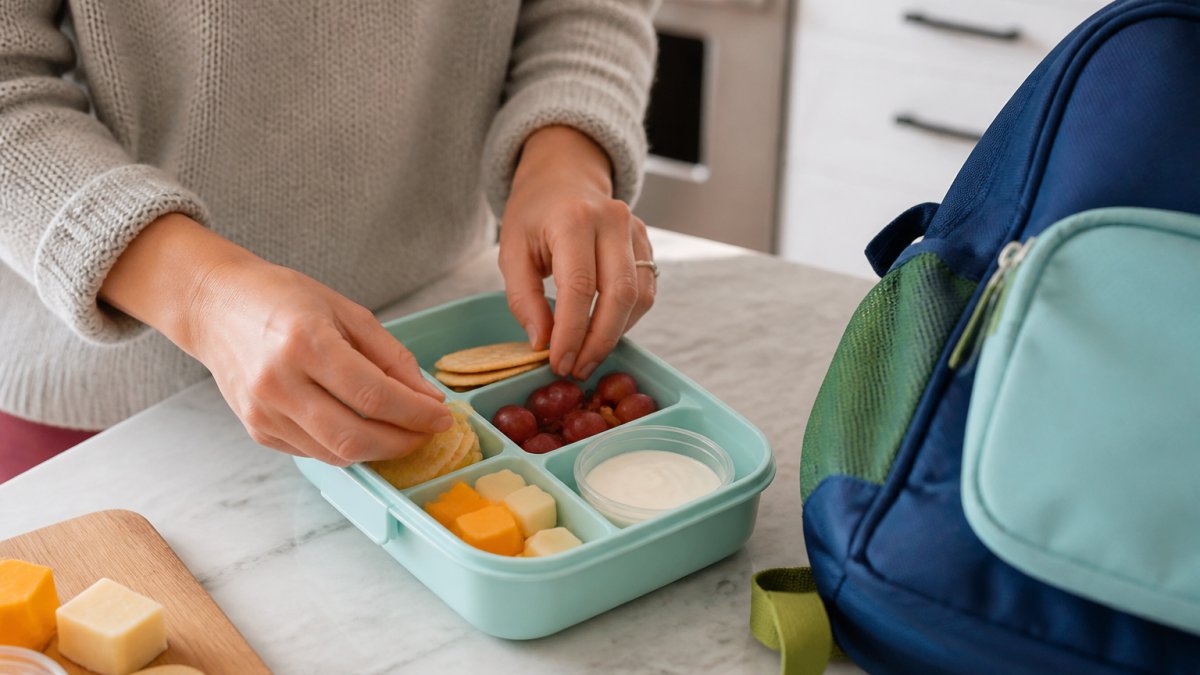
Parent packing a compartmentalized lunchbox with crackers, cheese, and grapes near a child's backpack
Choose foods that hold their shape and color for four hours. Skip anything that browns, wilts, or leaks. Use a compartment box so foods stay separate. Many picky eaters refuse foods that touch.
No-Heat Options That Hold Up Until Noon
- Turkey and cheese roll-ups
- Hard-boiled eggs, peeled at home
- Crackers with hummus or cream cheese
Small Portions and One-Bite Portions
A "one-bite" portion is exactly what it sounds like: a single taste of something new, placed beside familiar foods. It removes the pressure of a full serving. If your child eats it, great.
Pack one familiar food in every compartment. Then add one small taste of a new food. That's it. The familiar foods keep the lunch safe. The small taste keeps food exposure going without a fight.
How to Introduce New Foods to Picky Eaters Without a Lunchtime Fight
The lunchbox is not the place for a surprise. Establishing a predictable routine for these meals also provides a natural opportunity to integrate consistent lunchbox hygiene tips that keep the focus on comfort rather than the stress of cleaning up.
Start at home, at a calm meal. Serve the new food next to a preferred food. Say nothing about it. For a deeper look at the no-pressure approach, see our guide on how to help picky eaters.
Match the Method to the Reason for Refusal
Before you pick a strategy, watch what your child actually does with an unfamiliar food. The reaction tells you which lever to pull.
- Sensory refusal looks like recoiling from a texture, smell, or mixed consistency, a child who eats smooth yogurt but gags on yogurt with fruit chunks, or who tolerates a food only in one specific form. For these kids, change the form before you change the food: raw carrot may fail where soft cooked carrot works; crunchy crackers may work where bread does not; a dip on the side lets them control how much sauce touches each bite. Serve new foods separated on the plate, never mixed in.
- Anxiety-driven refusal looks like distress before the food is even tasted, tears at the sight of an unfamiliar item, clinging, or a child who asks repeatedly what is in something. For these kids, predictability matters more than novelty: preview the food, name it plainly, and keep it beside a trusted food without any expectation of eating it that day.
- Developmental refusal is ordinary and expected in toddlers and preschoolers, who may need to see a food 10 to 15 times before tasting it and taste it several more times before accepting it. This is normal, not failure, and it responds best to calm repetition rather than new tactics.
Repeated Exposure and Familiar Pairings
Food acceptance rarely happens on the first try. Many kids need to see a new food several times before they taste it. Exposure counts even when nothing is eaten, a food that is looked at, touched, sniffed, or licked has been exposed.
Pair new foods with familiar ones. Add a new vegetable beside the pasta your child already trusts. Put a new fruit next to the crackers. Familiar foods act as anchors.
Age-Specific Adjustments
The same principle, low pressure, repeated exposure, looks different by age.
- Toddlers and preschoolers: keep portions tiny (a single pea, one slice of strawberry) and expect mess. Eating is still a sensory experiment at this age, and touching or squishing food is part of learning to accept it.
- School-age kids: involve them in choosing and packing. A child who picked the new fruit at the store or washed the grapes is far more likely to eat them. Let them pack one "adventure" item per week alongside safe foods.
- Tweens and teens: autonomy is the lever. Offer a short list of new options and let them pick, and keep commentary out of it. Teens who feel watched at the table often refuse simply to reclaim control.
Dips, Sauces, and Texture Workarounds
Dips do real work. A dipping sauce gives a child control over taste and texture. Ranch, hummus, yogurt, salsa, and mild cheese sauce all make vegetables and proteins more approachable. For texture-sensitive kids, change the form, not the food, a food accepted in one form (pureed, crispy, cold) still counts as acceptance of that food.
When Picky Eating Crosses Into Something More
Ordinary selectivity responds to time and low pressure. Some patterns warrant a conversation with your pediatrician or a feeding specialist: persistent distress at meals, a diet that keeps shrinking over months, gagging or choking concerns, poor growth, or refusal that interferes with family life. Sensory sensitivities, swallowing or gastrointestinal issues, and neurodivergence (including autism and ADHD) can all shape how a child experiences food, and they call for tailored support rather than more of the same tactics.
What a Balanced Lunch for Kids Actually Looks Like
A balanced lunch does not need to be picture-perfect. It needs to cover the basics without overwhelming your child.
Sweet & Savory Blends - Best of Both Worlds →
Use this checklist as your guide:
- One protein source (eggs, cheese, turkey, beans, yogurt)
- One grain (crackers, bread, pasta, cereal)
- One fruit or vegetable, in a form your child accepts
Here's what most guides miss: a balanced lunch is measured over a week, not a single day. One day of crackers and cheese is not a crisis. A week of variety, most days, is the goal.
Easy Lunchbox Ideas for Kids When Mornings Are Chaos
Some mornings there is no time to think. Build a grab-and-go system that runs without you.
Prep on Sunday. Wash grapes, cut cheese, boil eggs, and portion crackers into small containers.
Keep a "safe foods" shelf. Stock it with items your child reliably eats.
For a fast nutrition boost, our Sweet & Savory Blends blend into foods kids already love, like yogurt, applesauce, and pasta sauce.

Sweet & Savory Blends - Best of Both Worlds
Closing the Nutrition Gap When the Lunchbox Comes Home Full
A full lunchbox is not a parenting failure. It is information, it tells you that today was hard, that the food did not travel well, or that your child was anxious at the table. The mistake most guides make is treating a full box as a nutrition problem to solve with supplements, when it is often a signal problem: the fix starts with reading the signal correctly.
Read the Pattern Before You React
One full lunchbox is a data point. A week of them is a pattern. Before you change anything, look at when the box comes home full:
- Full on new-food days only: your child is not yet comfortable with the unfamiliar item, and the safe foods around it may not be enough to carry the meal. Shrink the new item and add one more trusted food.
- Full on busy or test days: anxiety and stress suppress appetite in many kids. A child who eats well on calm days but not on high-pressure days is telling you the issue is regulation, not pickiness.
- Full most days, with a shrinking list of accepted foods: this is the pattern worth raising with your pediatrician, because a narrowing diet over weeks or months is different from ordinary selectivity.
What to Do During an Anxious Lunch Period
If your child reports feeling anxious at lunch, a common and under-discussed trigger, since lunchrooms are loud, fast, and socially loaded, lower the stakes rather than adding pressure. Practical moves that help:
- Pack foods that are easy to eat quickly and quietly, so your child is not the last one at the table.
- Keep the lunch visually simple: fewer items, separated, nothing that requires assembly.
- Ask the school about a calmer seating option or a quiet lunch group if anxiety is significant.
Close the Gap Without a Fight
If lunches come home full most days, your child may be missing key nutrients. Our article on signs your child has nutritional gaps walks through what to watch for. For a step-by-step plan, read how to bridge nutritional gaps in toddlers. And when you need small, practical fixes, these methods to add nutrients to picky eater foods help you fortify what your child already eats.
The USDA's child nutrition guidance supports offering variety without pressure. Progress, not perfection, is the target, and a balanced week matters far more than a balanced single lunch.
When to Seek Professional Help
Most lunchbox struggles resolve with time, routine, and low pressure. Seek professional guidance if you see any of the following:
- Persistent distress around meals that does not ease over weeks.
- A diet that keeps narrowing, or a child who drops entire food groups.
- Growth or weight concerns noted by your pediatrician.
Start with your pediatrician, who can screen for medical and developmental factors and refer to a pediatric feeding specialist, registered dietitian, or occupational therapist as needed. Sensory sensitivities, gastrointestinal issues, and neurodivergence can all shape how a child eats, and tailored support beats pushing harder with the same tactics.
Build Your First Pressure-Free Lunchbox This Week
Here is your challenge: pack one lunchbox this week using the five-part formula. Same shape, small portions, one familiar food in every compartment.
Tiny Wins was created for exactly this problem. Our whole-food blends are made from real fruits and vegetables, with no artificial ingredients and no added sugar.
Start with the Savory Blend for pasta and soups, or the Sweet Blend for yogurt and oatmeal.


Frequently Asked Questions
What should I pack for a picky eater's school lunch?
Build the lunch from foods your child already accepts, then add one small extra. A workable formula is a familiar protein, a grain or starch, a fruit or vegetable they tolerate, and a dip or sauce. Keep portions small so the box does not look overwhelming. Packing one new food next to three preferred foods lets your child choose whether to try it without any pressure, and a lunch that comes home partly eaten is still a lunch that was offered.
Should I pack foods my child already likes or introduce new foods?
Do both, but keep the ratio in your child's favor. Most of the lunchbox should be preferred foods so your child has something reliable to eat during a short, busy lunch period. One new or non-preferred food alongside them is enough. Repeated exposure over many weeks, without forcing a bite, is what gradually builds food acceptance. If your child comes home hungry and irritable every day, pull back to familiar foods for a while and reintroduce new items later.
How can I pack a balanced lunch for kids who refuse vegetables?
Stop measuring balance per lunchbox and look at the week instead. A balanced lunch for kids can include fruit, dairy, protein, and a grain even on days when no vegetable appears. Serve vegetables in forms your child tolerates, such as raw and crunchy, roasted, or blended into a sauce. If the overall diet stays narrow, a whole-food booster mixed into foods your child already eats can add nutrients from real fruits and vegetables without changing taste or texture.
How do I reduce stress around packing and eating school lunch?
Pack the night before, keep a short rotation of lunches you know work, and let your child make one choice, such as which fruit or which dip goes in. At home, avoid asking how much was eaten or bargaining over the box. A predictable meal routine and a reasonable meal length take pressure off both of you. If your child shows distress around food most days, or their growth or weight is a concern, talk to their pediatrician about feeding support.


Leave a comment
This site is protected by hCaptcha and the hCaptcha Privacy Policy and Terms of Service apply.