
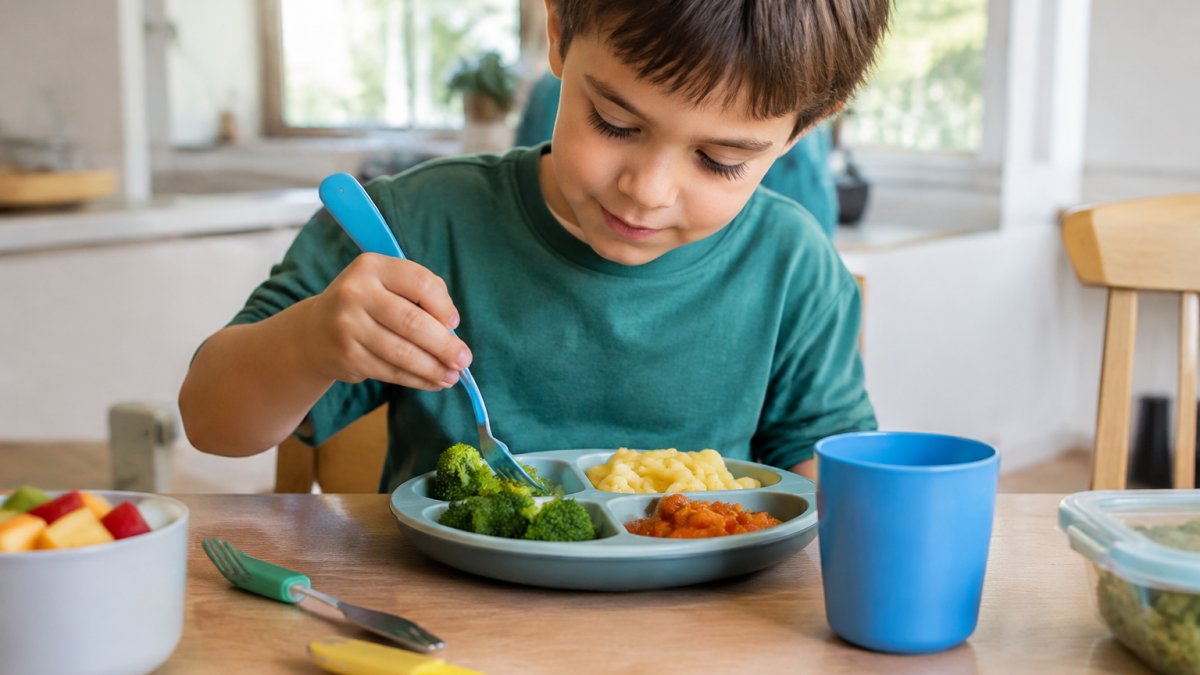
Quick Summary
The essential mealtime tools for children with sensory food challenges are a suction plate, a weighted spoon, an open cup, and one textured bowl. Start with these four basics and add pieces only as your child shows readiness, swapping one tool at a time.
- Start with the lightest weighted utensil option and size up only if your child wants more feedback.
- Swap one tool at a time, beginning with the plate, then the spoon, then the cup.
- For tactile defensiveness, choose smooth matte finishes and avoid metal that conducts temperature.
- Keep two of each favorite tool so one is always clean, and hand-wash weighted utensils.
- A muffin tin works as a divided plate and a rolled washcloth under a bowl adds grip.
Table of Contents
- Why Mealtime Tools Matter for Children With Sensory Food Challenges
- Sensory-Friendly Feeding Tools That Support Food Exploration
- Feeding Therapy Tools for Home: What Therapists Actually Recommend
- How to Reduce Mealtime Power Struggles With the Right Setup
- Matching Tools to Your Child's Age and Sensory Profile
- Keeping Sensory Tools Clean, Safe, and in Rotation
- Building Your Child's Mealtime Tool Kit
- Frequently Asked Questions
Why Mealtime Tools Matter for Children With Sensory Food Challenges
A child who gags at the sight of a fork or refuses to touch a wet noodle is not being difficult. Sensory food challenges change how a child's brain reads texture, smell, temperature, and pressure, and standard utensils often make that read worse.
Many parents dread dinner before it starts. The right mealtime tools can lower that stress. They give a child more control, more warning, and less sensory surprise with every bite.
Sensory processing disorder and general sensory-avoidant eating both affect the mouth and hands. A heavy spoon or a plate that stays put can mean the difference between one bite and a full meltdown.
Here is what most guides miss: the tool is not a cure. It is a bridge. It buys calm, and calm is where food exploration actually happens.
Sensory-Friendly Feeding Tools That Support Food Exploration
Sensory-friendly feeding tools are utensils, plates, and cups designed to reduce sensory overload while a child learns to tolerate new foods. They adjust weight, texture, grip, and stability so a child can focus on the food instead of fighting the equipment.
Adaptive Cutlery and Weighted Utensils
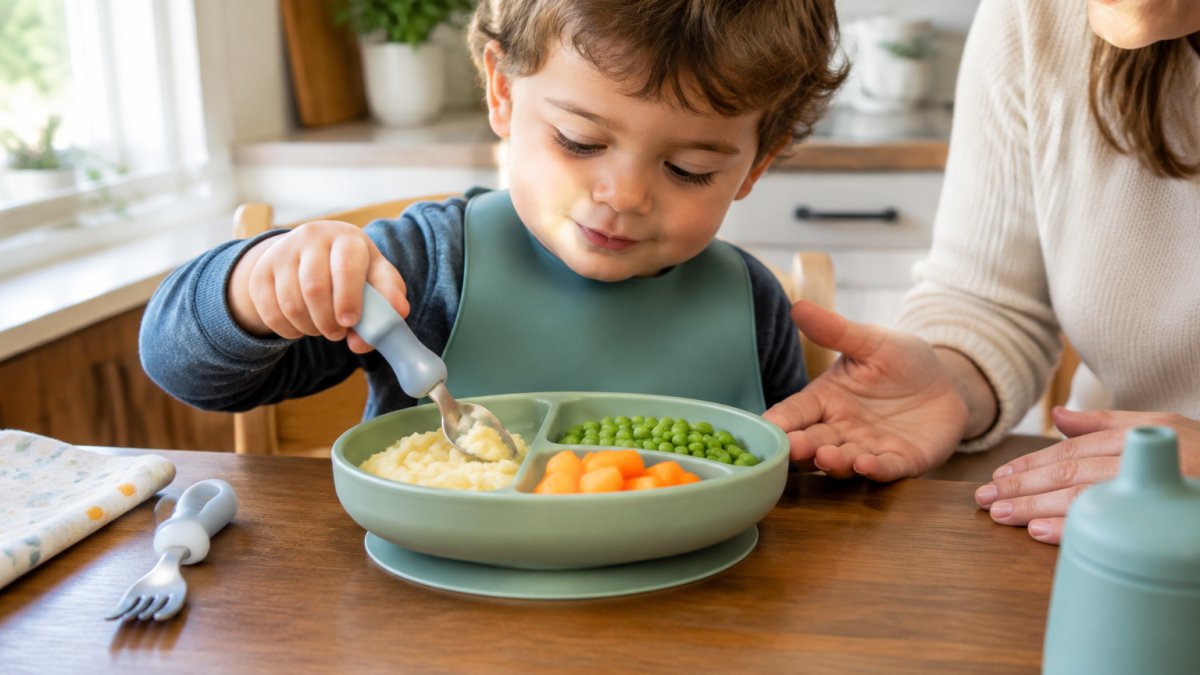
Adaptive cutlery is a broad label. In practice, it covers spoons with thick handles, angled forks, and weighted utensils that add steady proprioceptive input to the hand and mouth. That extra feedback helps many children feel where the food is.
Watch out: heavier is not always better. A child with low tone may tire fast, so start with the lightest weighted option and size up only if your child seems to want more feedback.
Textured Plates, Bowls, and Cups
Textured plates and divided dishes keep foods separate, which matters for a child who panics when peas touch chicken. Suction bases stop the plate from sliding, and a rim gives a spoon something to push against. That support builds lip closure and steadier scooping over time.
Sippy cups with controlled flow help too. They let a child practice breath control without a rush of liquid.
Feeding Therapy Tools for Home: What Therapists Actually Recommend
Feeding therapy tools for home work best when they match what a therapist is already doing in sessions. Ask your child's occupational therapy team which tools they use, then copy those at home so the child is not learning two systems.
A common approach is to start with one change at a time. Swap the plate first. Add a weighted spoon a week later. Too many new tools at once raises arousal levels and backfires.
Therapists tend to favor tools that support desensitization and food chaining rather than tools that force a bite. The goal is texture tolerance, not volume. For a deeper look at the clinical side, the step-by-step guide to sensory food aversions walks through the approach.
How to Reduce Mealtime Power Struggles With the Right Setup
Learning how to reduce mealtime power struggles starts with the setup, not the child. A predictable table, a familiar plate, and a tool your child helped choose remove the two things that trigger most battles: surprise and loss of control.
Try this sequence:
- Set the same mealtime routine every day, same chair, same plate.
- Offer one safe food and one new food, never a full plate of unknowns.
- Let your child serve themselves with the adaptive tool, even messily.
- Keep the meal to a set time, then end it calmly with no negotiation.
- Use positive reinforcement for touching, smelling, or licking, not just eating.
A common mistake is turning the tool into a bribe. "One bite and you get the iPad" teaches a child that eating is a transaction. Let the tool be a comfort object instead.
If dinner still ends in tears, the practical guide to ending mealtime power struggles goes deeper into the behavior side.
Matching Tools to Your Child's Age and Sensory Profile
Age and sensory profile should drive the choice, not the label on the box. A toddler and a five-year-old need very different grips, and a child with tactile defensiveness needs different textures than a child who seeks input. Most guides stop at a simple age chart. The useful version is a progression roadmap: what to start with, what to add when, and what to retire as oral motor skills mature. Mastering this developmental sequence is a foundational step in advocating for sensory needs within the broader context of your child's therapeutic journey.
Age Range |
Tool Focus |
What to Look For |
When to Move On |
|---|---|---|---|
6-12 months |
Oral exploration |
Soft-tip spoons, open cups with small volumes, silicone teethers for mouthing |
Child brings objects to mouth deliberately and sits with support |
12-24 months |
Grip and stability |
Short handles, suction plates, soft-tip spoons, divided bowls |
Child scoops with a full hand and keeps a plate in place for a full meal |
2-3 years |
Self-feeding control |
Weighted spoons, divided plates, open cups, short angled forks |
Child uses a pincer grasp and can stab soft foods without help |
3-5 years |
Texture tolerance |
Textured bowls, angled forks, food-safe sensory bins, small tongs |
Child tolerates mixed textures on one plate and tries two new foods per week |
5+ years |
Independence |
Standard-size adaptive cutlery, portion control plates, kid-safe knives |
Child can serve from a shared bowl and cut soft foods with a table knife |
Match the tool to the oral motor skills your child has now, not the ones you hope for. A fork your child cannot aim with will only frustrate them. The progression is not strictly linear, either. A child who is tactile-defensive may stay on textured bowls longer while moving ahead on cutlery, and a child with low tone may need lighter weighted options at every stage.
For tactile defensiveness, start with tools that have a smooth, matte finish and avoid metal that conducts temperature. For a sensory seeker, heavier weighted utensils and textured grips often satisfy the need for input and reduce hand-mouth seeking at the table. For a child with proprioceptive under-responsiveness, a weighted spoon or a plate with a raised rim gives clearer feedback about where the food is.
A common pattern many families describe is the "one new tool per week" rule. Swap the plate first, then the spoon, then the cup. If a child regresses on a familiar food after a tool change, go back one step and hold there for two weeks before trying again.
Watch out: age charts assume typical development. If your child was born prematurely or has a feeding disorder diagnosis, use corrected age and your therapist's guidance rather than the calendar.
Keeping Sensory Tools Clean, Safe, and in Rotation
Sensory tools get chewed, dropped, and left in backpacks, so cleaning matters more than most parents expect. This is the part most guides skip: specialized silicone, weighted handles, and suction bases each have their own cleaning limits, and getting them wrong shortens tool life or creates a safety problem.
Check the manufacturer's dishwasher guidance first, since heat can warp weighted handles and break suction seals. As a general rule, silicone plates and bowls tolerate the top rack, but weighted utensils and anything with a sealed compartment should be hand-washed. A bottle brush reaches the inside of thick-handled spoons; a soft sponge protects textured surfaces from scratches that trap residue.
A simple rotation system works well:
- Keep two of each favorite tool so one is always clean.
- Wash suction bases by hand to protect the seal.
- Check weighted handles monthly for cracks or loose caps.
- Retire any utensil with a worn or peeling coating.
- Sanitize silicone in boiling water only if the manufacturer allows it; otherwise use a food-safe sanitizing solution.
Watch out: weighted utensils can contain small parts. Inspect them often, and replace anything that rattles or leaks. A rattling handle can mean the internal weight has come loose, which is a choking hazard for a child who chews.
Storage matters too. A damp silicone plate left in a closed cabinet can develop a musty smell that a sensory-sensitive child will notice before you do. If a tool goes to school or daycare, label it and send it in a breathable bag rather than a sealed plastic container so it dries between meals.
A rotation schedule helps: assign each tool a day of the week, wash it that night, and return it to the drawer. That keeps favorites available without buying duplicates of everything. When a tool starts to smell, stain, or feel tacky after washing, it is time to replace it, even if it looks intact.
Building Your Child's Mealtime Tool Kit
A mealtime tools kit does not need to be expensive. Start with four basics: a suction plate, a weighted spoon, an open cup, and one textured bowl. Add pieces only as your child shows readiness.
Budget-friendly options exist. A muffin tin works as a divided plate, and a rolled washcloth under a bowl adds grip.
For the nutrition side, many parents pair tools with a supplement. Our Sweet & Savory Blends mix into foods kids already eat, and you can choose your blend to find the right fit. If you want to go further, the guide to supplements for sensory eaters covers what to look for.

One more piece of the puzzle is texture. The guide to introducing new food textures helps you pace that step so tools and food work together.
Frequently Asked Questions
What are the best sensory-friendly plates and utensils for picky eaters?
Look for divided plates with suction bases so foods stay separate and the plate stays put, weighted utensils that give steadier hand control, and short-handled spoons for easier lip closure. Silicone or matte finishes feel less jarring than cold metal. Introduce one new mealtime tool at a time alongside familiar foods, and let your child handle it before it ever touches food. The goal is predictability and control, not novelty.
How do I introduce new mealtime tools to a child with sensory sensitivities?
Start outside the meal. Let your child hold, wash, or play with the new spoon or plate during sensory bins or food exploration time, days before it appears at the table. Place it next to their usual tool, not instead of it. Keep your mealtime routine unchanged otherwise. If your child rejects it, put it away and try again in a week. Forced introduction backfires with tactile defensiveness; slow exposure builds texture tolerance over time.
How can mealtime tools help children with sensory processing disorder?
Tools address the physical side of feeding that behavior strategies alone miss. Weighted utensils provide proprioceptive input that steadies the hand and calms arousal levels. Suction-based plates stop sliding, which removes one source of frustration. Textured or divided plates support visual exploration and keep foods from touching. These supports reduce the sensory load of eating so your child can focus on the harder work: tasting, chewing, and building oral motor skills.
Can specialized cutlery help children with ARFID?
Cutlery alone won't treat ARFID, which usually needs a feeding intervention led by a professional, often occupational therapy or a feeding clinic. That said, adaptive cutlery can support the work done in feeding therapy at home: weighted utensils improve control, and short spoons help with lip closure. Think of tools as removing barriers, not as the treatment. If food refusal is severe or growth is affected, talk to your pediatrician about a referral before buying anything.
Building a calm mealtime takes patience, and no single tool does it alone. At Tiny Wins, we make it easier to close the nutrition gap while your child builds skills at their own pace. Our tasteless whole-food powders blend into the foods your child already trusts, with no artificial ingredients and third-party testing for purity. Choose your Blend and add real nutrition to the meals your sensory eater accepts.




Leave a comment
This site is protected by hCaptcha and the hCaptcha Privacy Policy and Terms of Service apply.