
Table of Contents
- Understanding Sensory Sensitivities and Food Aversions in Autism
- Food Chaining for Autism: Building Acceptance One Step at a Time
- Step-by-Step: How to Introduce New Food Textures
- Sensory-Friendly Meal Ideas for Toddlers with Texture Challenges
- Autism Food Aversion Strategies: Creating a Supportive Mealtime Environment
- Managing Parental Stress and Mealtime Burnout
- When to Collaborate with an Occupational Therapist
- Bridging Nutritional Gaps While Building Texture Acceptance
- Frequently Asked Questions
Understanding Sensory Sensitivities and Food Aversions in Autism
Sensory sensitivities in autism affect how children experience food. Textures, tastes, smells, and appearance can trigger strong reactions, making it feel overwhelming rather than exciting to introduce new food textures.
Food aversions go beyond picky eating. A child with sensory sensitivities may gag, refuse to swallow, or become distressed when a certain texture enters their mouth, a genuine sensory processing difference, not stubbornness (Checking your browser).
Sensory sensitivities can be gradually managed with patience and the right strategies. The key is working WITH their sensory system, not against it.
Food Chaining for Autism: Building Acceptance One Step at a Time
Food chaining is a structured method for introducing new food textures by starting with foods your child already accepts, then gradually modifying one characteristic, texture, temperature, taste, or appearance, until your child tolerates a new food.
Food chaining works because it respects the child's sensory baseline, creating a bridge rather than a leap. Example: chicken nuggets → softer nuggets → shredded chicken → chicken with sauce → mixed textures.
Identify your child's "safe foods" (eaten without resistance), then select a "bridge food" that shares one characteristic but introduces one new element. This gradual shift prevents sensory overload.
Food chaining takes weeks or months per chain, but builds genuine acceptance, not just tolerance.
Step-by-Step: How to Introduce New Food Textures
Step 1: Assess Your Child's Current Food Preferences
List every food your child eats without resistance, including drinks and snacks. Note the texture of each: crunchy, soft, smooth, chewy, or creamy.
Look for patterns in texture and temperature preferences to reveal sensory patterns and build a realistic food chain.
Note which textures trigger the strongest negative reactions (lumpy, wet, mixed) to guide which textures to introduce first.

Step 2: Choose a Bridge Food Using Food Chaining Principles
A bridge food shares one characteristic with a safe food but introduces one new element. Example: smooth applesauce → applesauce with tiny, soft fruit pieces.
The bridge food should be only slightly different from the safe food, think in millimeters, not miles.
Write down 2-3 possible bridge foods and test them without pressure. Familiarity alone is progress.
Step 3: Introduce Texture Gradually Through Play and Exploration
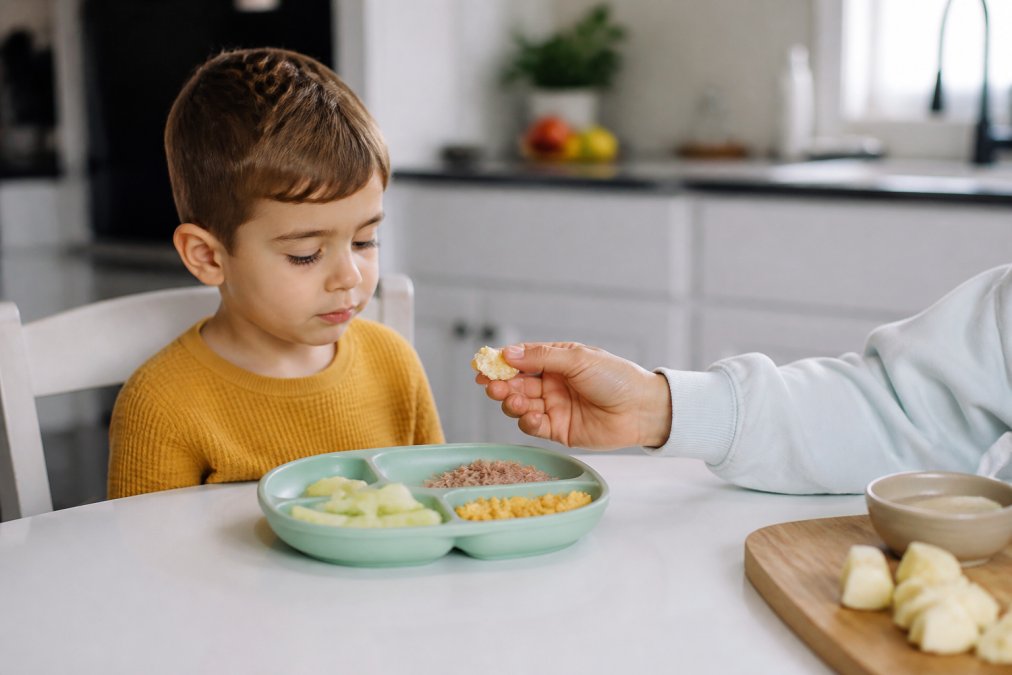
Food exploration through play removes pressure. Let your child touch, smell, and lick new foods without expectation of eating them.
Offer the bridge food alongside safe foods during regular meals. Touching or licking it counts as progress.
Step 4: Practice Exposure Without Pressure
Serve the bridge food regularly (3-4 times per week) without forcing your child to eat it.
Watch for small signs of acceptance: touching, smelling, or tasting the food. Celebrate quietly; over-praising creates pressure.
If your child refuses consistently, try a different bridge food. Some work better than others.
Step 5: Celebrate Small Wins and Build Confidence
Recognize progress with low-key comments like "I noticed you touched that" rather than excessive praise.
Accepting a bridge food builds confidence that transfers to future food introductions.
Sensory-Friendly Meal Ideas for Toddlers with Texture Challenges
Sensory-friendly meals respect texture preferences while expanding options within your child's comfort zone.
Safe meal ideas for texture-sensitive children:
- Soft pasta with smooth sauce (no chunks)
- Mashed sweet potato or regular potato
- Scrambled eggs (soft, uniform texture)
- Yogurt or pudding
- Finely shredded chicken mixed into familiar foods
- Smooth nut butters on soft bread
- Pureed soups
- Soft rice or quinoa
- Banana or avocado (naturally soft)
- Smooth cheese or cream-based sauces
Serve safe foods regularly so your child knows what to expect. Predictability reduces mealtime anxiety.
Supplemental nutrition helps bridge gaps while you work on texture acceptance. Tasteless, whole-food powders like Tiny Wins blend seamlessly into existing foods without changing taste or texture.
Autism Food Aversion Strategies: Creating a Supportive Mealtime Environment
A calm, predictable mealtime environment reduces sensory stress and increases openness to new foods.
Managing Parental Stress and Mealtime Burnout
Feeding a child with sensory aversions is exhausting. Frustration, nutritional worry, and guilt are valid and common. Research shows feeding challenges rank among the top sources of parental stress in autism (Checking your browser).
Practical Strategies for Reducing Mealtime Stress
- Separate nutrition from behavior: consistent safe foods provide nutrition; gaps aren't emergencies.
- Set realistic timelines: expect months, not weeks. Moving from 10 to 12 foods in six months is meaningful.
- Create one "no-pressure" meal weekly where you eat together without focus on what your child eats.
- Share feeding responsibilities with a co-parent to prevent one person bearing all stress.
- Track progress visually in a log; monthly reviews reveal progress daily life obscures.
- Use language like "sensory-sensitive eater" instead of "picky" to reduce shame and reframe as neurological.
- Acknowledge grief over lost "normal" mealtimes rather than pushing it away.
When to Collaborate with an Occupational Therapist
An Occupational Therapist (OT) specializing in feeding can assess your child's sensory profile and oral motor skills to identify whether aversions stem from sensory processing, muscle tone, or motor coordination issues.
If Access to OT Is Limited
- Focus on oral motor play: blowing bubbles, playing wind instruments, drinking through straws, or chewing on safe toys designed for oral input.
- Offer varied textures during play (not meals) so your child can explore without pressure.
- Watch videos or read resources from speech-language pathologists (SLPs) who specialize in feeding, as they often address similar issues.
- Contact your child's school district; many offer OT services through special education if your child qualifies.
- Ask your pediatrician for a referral to a hospital-based feeding clinic, which may have shorter waitlists than private OTs.
Bridging Nutritional Gaps While Building Texture Acceptance
Expanding food textures takes time. In the meantime, your child's nutritional needs don't pause. This is where strategic supplementation helps.
A whole-food supplement designed for picky eaters can:
- Fill gaps in vitamins and minerals without changing meal routines
- Reduce parental anxiety about nutrition
- Work seamlessly into foods your child already accepts
- Provide peace of mind while you focus on texture work
Look for supplements that are:
- Tasteless and texture-neutral (won't interfere with sensory work)
- Made from whole-food ingredients
- Third-party tested for purity
- Free from artificial additives
- Easy to mix into familiar foods
Frequently Asked Questions
How do I introduce new food textures to my autistic child without triggering a gag reflex?
Start with foods that closely match textures your child already accepts. Use food chaining to bridge familiar foods to new textures gradually. Let your child explore the food by touching, smelling, and licking it before swallowing. Practice this in low-pressure moments during play rather than at mealtimes. Celebrate any positive interaction, even if they don't eat it. This systematic desensitization approach respects your child's sensory processing differences while building tolerance over weeks or months.
What is food chaining for autism, and how does it help with texture acceptance?
Food chaining connects foods your child already eats to new options by changing one characteristic at a time—texture, temperature, flavor, or appearance. For example, if your child eats smooth applesauce, you might introduce slightly chunky applesauce, then soft pear pieces, then soft cooked vegetables. This gradual progression allows their sensory system to adapt without overwhelming them. Food chaining respects their current comfort level while expanding their food acceptance systematically, making it especially effective for children with selective eating and sensory sensitivities.
How long does it typically take to see progress when introducing new food textures?
Progress varies widely depending on your child's sensory profile and anxiety level. Some children show comfort with a new texture within 2-3 weeks of consistent, pressure-free exposure. Others may need 2-3 months of gradual practice before accepting it. Consistency matters more than speed—daily or near-daily exposure in play-based settings typically yields faster results than sporadic attempts. Track small wins like touching the food or bringing it near their mouth, not just swallowing. Many parents notice improved confidence and reduced mealtime stress before they see actual dietary expansion.
What should I do if my child refuses to engage with new textures despite trying food chaining?
Persistent refusal often signals that the texture jump is too large, the timing isn't right, or your child needs professional support. Take a step back and choose an even more similar bridge food. Ensure mealtimes are calm and pressure-free—forcing or bribing can deepen food aversions. Consider consulting an occupational therapist who specializes in pediatric feeding, as they can assess oral motor skills, sensory processing, and behavioral factors you might not see at home. In the meantime, focus on nutritional supplementation to ensure your child gets essential nutrients while you work on texture acceptance.



Leave a comment
This site is protected by hCaptcha and the hCaptcha Privacy Policy and Terms of Service apply.