
Table of Contents
- Understanding Toddler Constipation: Causes and Warning Signs
- The Role of Fiber and Hydration in Toddler Digestion
- 5 Best Fiber-Rich Foods for Toddler Digestion
- How to Increase Fiber in Your Toddler's Diet
- Toddler Constipation Relief Supplements: When and Why
- Dietary Changes vs. Supplements: Which Works Faster?
- When to Seek Professional Medical Advice
- Conclusion
- Frequently Asked Questions
Understanding Toddler Constipation: Causes and Warning Signs
Toddler constipation relief is a common parental concern. Difficulty passing stool, pain during bowel movements, or hard, dry stools are clear warning signs that something needs to change.
Causes include transitioning to solid foods, potty training anxiety, and a diet low in fiber and fluids.
The Psychological Component: Fear of Pooping and Rectal Withholding
Behavioral withholding, where children tighten rectal muscles to avoid bowel movements, is often overlooked. It stems from fear, pain memory, or potty training anxiety and can persist long after the physical cause resolves.
Common triggers include:
- Potty training pressure: Starting toilet training before a child is developmentally ready (typically before age 2.5 to 3 years) can create anxiety and resistance.
- Pain memory: A single episode of hard stool or anal fissure can create lasting fear, causing a child to clench muscles preemptively.
- Loss of control: Toddlers are developing autonomy; forcing bathroom habits can feel like a power struggle, leading to deliberate withholding as an assertion of control.
- Environmental changes: Moving to a new home, starting daycare, or family stress can trigger anxiety-based withholding.
Increasing fiber without addressing underlying fear can backfire, reinforcing the child's resistance.
Recognizing withholding behavior:
Watch for squatting, leg-crossing, clenching, hiding, or rigid posturing, signs the child is actively resisting, not simply struggling.
Combine dietary improvements with behavioral strategies: remove potty training pressure, normalize bowel movements through conversation and books, and consult a pediatrician if withholding is severe.
Understanding the Root Cause Shapes Your Solution
Potty training anxiety triggers rectal withholding, creating a cycle: fear → withholding → harder stool → reinforced fear.
Seek professional help for blood in stool, severe abdominal pain, vomiting, or a distended belly.
tip A common mistake is waiting too long before addressing constipation. The longer stool sits in the colon, the more water gets reabsorbed, making it harder and more painful to pass. Early intervention prevents the cycle from worsening. This is especially critical if withholding behavior is present, the longer a child avoids bowel movements, the more entrenched the fear becomes.
The Role of Fiber and Hydration in Toddler Digestion
Fiber adds bulk to stool and moves it through the digestive system efficiently. Without adequate fiber, stool becomes hard and compact.
Hydration is equally critical. Low water intake causes the colon to reabsorb fluid from stool, leaving it dry and difficult to pass.
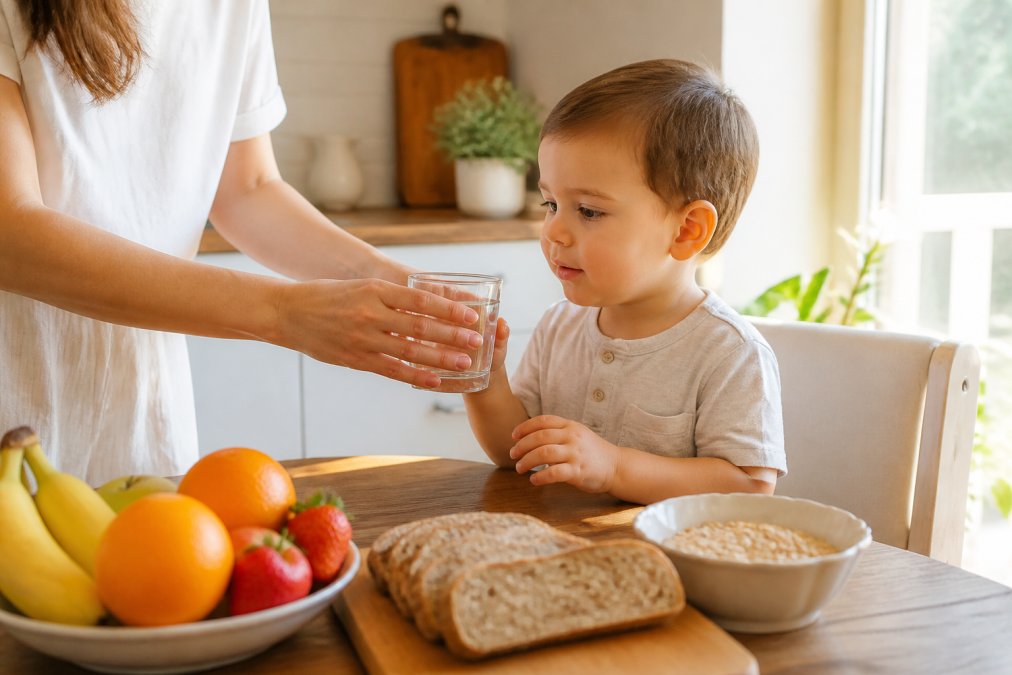
Most toddlers need 4-8 cups of fluid daily. Water is best; avoid excessive juice, which is high in sugar and can worsen constipation.
Fiber and water work together: fiber provides bulk, water provides lubrication. Without both, constipation develops.
5 Best Fiber-Rich Foods for Toddler Digestion
Whole grains are the easiest entry point. Swap regular pasta for whole wheat pasta, most toddlers don't notice the difference with familiar sauces.
Legumes pack fiber but can trigger texture sensitivity. Mix mashed beans into familiar foods like cheese quesadillas rather than serving whole.
Fresh fruits deliver fiber and sweetness. Pears are particularly effective for toddler constipation relief; berries blend into yogurt or applesauce.
Vegetables like sweet potato and peas offer fiber. Roasted sweet potato fries appeal to picky eaters more than steamed florets.
Chia seeds and ground flaxseed are tasteless additions that boost fiber without changing the flavor of foods your toddler already accepts. A teaspoon mixed into yogurt, applesauce, or oatmeal adds fiber without detection, especially valuable for sensory-sensitive children.
How to Increase Fiber in Your Toddler's Diet
Increase fiber gradually over 1-2 weeks to avoid bloating and gas.
Start with foods your child already eats. Swap pasta for whole wheat, bread for whole grain.
Mix new foods with familiar ones, blend beans into tacos, stir pumpkin into applesauce, add vegetables to mac and cheese.
Hydration is non-negotiable during this transition. As fiber intake increases, water consumption must increase too, otherwise, stool becomes even harder. Offer water consistently throughout the day, not just at meals.
Track what works. Keep a simple log of what your toddler eats and their bowel movements for a few days. You'll quickly see which foods have the most impact on regularity.
Toddler Constipation Relief Supplements: When and Why
Supplements become relevant when dietary changes alone aren't delivering results after 2-3 weeks. Stool softeners, osmotic laxatives, and fiber supplements are the most common options parents consider. However, the right supplement choice depends heavily on your toddler's age and developmental stage, particularly during the critical transition from formula or breastmilk to solid foods.
The 12-18 Month Transition: A Unique Window
Toddlers transitioning from formula or breastmilk to solids face a distinct constipation risk that older toddlers don't. Breast milk and formula are highly digestible and rarely cause constipation; solid foods introduce fiber, new proteins, and different digestive demands that a young gut must adapt to. During this window, constipation is often a sign of adjustment, not a dietary deficiency.
For this age group, the approach differs:
- Avoid high-fiber supplements initially: A 12-15 month old doesn't need concentrated fiber powder. Their digestive system is still learning to process whole foods. Instead, focus on introducing fiber-rich solids gradually (mashed pears, pureed prunes, finely minced vegetables mixed into familiar foods).
- Hydration becomes critical: As solids increase, water intake must increase too. Offer water in a sippy cup with meals and snacks. Many parents underestimate how much fluid a toddler needs during this transition.
- Gentle osmotic support: If constipation persists despite dietary changes, a pediatrician may recommend a mild osmotic laxative like polyethylene glycol in small doses. This is gentler than stimulants and works by drawing water into the colon without forcing contractions, appropriate for a developing digestive system.
- Probiotics for gut adaptation: Some pediatricians recommend probiotics during the solid-food transition to support beneficial gut bacteria as the microbiome shifts from a milk-based to a food-based diet. Evidence is mixed, but many families report smoother transitions with probiotic support.
Supplements for Older Toddlers (18+ Months)
Once a toddler is eating a varied diet of solid foods, supplement options expand. By this age, the digestive system has adapted, and constipation is more likely due to insufficient fiber or hydration rather than adjustment.
Osmotic laxatives like polyethylene glycol draw water into the colon, softening stool without stimulating bowel movements.
When to Start Supplements
Before starting any supplement, talk to your pediatrician. They can rule out underlying conditions and recommend the safest option for your child's specific situation and age. What works for an 18-month-old may not be appropriate for a 2.5-year-old, and professional guidance prevents unnecessary trial-and-error.
General timeline:
- First 5-7 days: Dietary changes alone (increased fiber, hydration, behavioral support).
- Days 7-14: If no improvement, introduce a gentle supplement alongside continued dietary work.
- Beyond 2 weeks: If constipation persists, pediatric evaluation is warranted to rule out underlying conditions.
Dietary Changes vs. Supplements: Which Works Faster?
Dietary changes produce results more slowly but address the root cause. Adding fiber and increasing hydration typically take 5-7 days to show improvement, sometimes longer if your toddler's constipation is severe. The payoff is that you're teaching sustainable eating habits that prevent future problems.
Approach |
Speed |
Sustainability |
Best For |
|---|---|---|---|
Dietary changes alone |
5-7 days |
High |
Mild constipation, prevention |
Supplements alone |
1-2 days |
Low |
Urgent relief, severe cases |
Combined approach |
2-4 days |
High |
Most situations |
When to Seek Professional Medical Advice
Contact your pediatrician if constipation lasts longer than two weeks despite dietary changes and supplements, if your toddler shows signs of pain or distress, or if you notice blood in stool. These warrant professional evaluation to rule out underlying conditions.
Conclusion
Toddler constipation relief doesn't have to mean weeks of struggle. Most cases respond well to increased fiber intake, better hydration, and lifestyle changes, sometimes with a gentle supplement to provide quick relief while those changes take effect. The key is starting early, being consistent, and knowing when to involve your pediatrician.
Frequently Asked Questions
What helps constipation fast in toddlers?
The fastest relief typically combines hydration, dietary fiber, and behavioral support. Increasing water intake, adding high-fiber foods like pears and prunes, and establishing consistent bathroom routines can produce results within 24-48 hours. Stool softeners or osmotic supplements may work within 12-24 hours if dietary changes alone aren't sufficient. However, every toddler responds differently. If constipation persists beyond a few days or causes severe discomfort, contact your pediatrician.
How long does it take for dietary changes to relieve toddler constipation?
Most children respond to dietary modifications within 3-5 days, though some see improvement within 24 hours. Increasing fiber intake, boosting fluid consumption, and adjusting meal timing all support bowel regularity. The key is consistency—sudden dietary shifts can initially worsen symptoms, so introduce fiber-rich foods gradually over a week. If no improvement occurs after 7-10 days of sustained dietary changes, consult your pediatrician about supplements or underlying causes.
Are fiber supplements safe for toddlers?
Yes, fiber supplements designed for children are safe when used as directed and chosen carefully. Look for products that are third-party tested for purity and free from artificial additives. Start with small doses to allow your toddler's digestive system to adjust, and always pair supplements with adequate hydration. Whole-food fiber sources like fruits, vegetables, and whole grains should be your first choice, with supplements filling gaps when diet alone is insufficient. Always consult your pediatrician before introducing any new supplement.
When should I consult a pediatrician for toddler constipation?
Contact your pediatrician if constipation lasts longer than 2 weeks, your toddler experiences severe abdominal pain, there's blood in the stool, or bowel movements are extremely hard and difficult. Also seek advice if your child shows signs of rectal withholding (holding in stool intentionally), has restricted dietary intake that limits fiber, or if you're unsure whether to use supplements. Early intervention prevents chronic constipation and helps rule out underlying gastrointestinal conditions.



Leave a comment
This site is protected by hCaptcha and the hCaptcha Privacy Policy and Terms of Service apply.