

For many parents, concerns about their child’s development don’t begin with a clear answer. They start with small moments: a toddler who doesn’t respond to their name, a child who avoids eye contact, or a quiet feeling that something is different, even if it’s hard to explain.
In the toddler years, children grow fast. New words, gestures, and social interaction skills appear almost daily. When those changes feel delayed, inconsistent, or absent, it can create real worry. Some parents are told to “wait and see,” while others start noticing patterns that don’t match other children their age. These patterns may reflect developmental differences, which can be early autism symptoms, such as variations in social, language, or motor skills compared to neurotypical children.
Autism is more common than many parents realize. Current estimates show that about 1 in 31 children is identified with autism spectrum disorder by early school age. Knowing this can help parents take early signs seriously, especially when something feels off in their child’s development.
This article is written to help you make sense of those concerns. Child psychology plays a key role in understanding and identifying early signs of autism, using developmental markers and screening protocols to support timely autism diagnosis. We’ll walk through the early signs of autism in toddlers, explain how autism spectrum disorder can affect a child’s development, and guide you through practical next steps if something feels off.
The goal is simple: help parents recognize early signs, understand what they mean, and take action early when needed. Early detection and support can truly improve outcomes for many children. Early signs of autism in toddlers typically appear between 12 and 24 months.
Overview: Autism Spectrum Disorder and Child’s Development
Autism spectrum disorder is a developmental condition that affects how children communicate, interact socially, and experience the world around them. It is called a spectrum because it presents differently in each child. Autistic children may show developmental differences compared to their peers, such as variations in social, language, or motor skills that can be noticed early on. Some children may have mild challenges, while others need more support in daily life.
Autism is also diagnosed more often in boys than in girls, with boys being over three times more likely to be identified. This means early signs in girls can be subtler, making careful observation and tracking of developmental milestones even more important.
Monitoring a child’s development is crucial, as early signs of autism can appear as delays or differences in communication, social skills, and behavior. Closely tracking a child's development helps identify autism spectrum disorder early, so timely evaluation and intervention can support overall growth. This includes communication skills, social interaction, behavior, and learning. Autism spectrum disorder can influence all of these areas in unique ways.
Research shows that many children with autism begin showing early signs during early childhood, often before age three. However, those signs can be subtle at first, which is why monitoring developmental milestones is so important.
One thing parents should understand is that autism spectrum disorder does not look the same in every child. Some children may have strong language skills but struggle in social situations. Others may show delayed speech or repetitive behaviors early on. That variability across the autism spectrum is exactly why careful observation matters. Key indicators in autistic children involve missed milestones such as limited eye contact, not responding to their name by 9–12 months, and lack of gesturing by 14 months.

When Is Autism Diagnosed? Timing and Autism Diagnosis
An autism diagnosis can sometimes happen as early as 18 to 24 months. In fact, organizations focused on disease control recommend screening children at both 18 months and 24 months, even if no concerns are obvious.
Still, many children are diagnosed later. Some children diagnosed with autism are not formally evaluated until preschool or even school age. That delay often happens because early signs are missed or attributed to personality differences.
Parents are usually the first to notice early warning signs. You might observe differences in communication skills, social interaction, or behavior long before a formal autism diagnosis is made. That’s why it’s important to document your observations: write down what you see, note when your child stops using words, avoids eye contact, or shows repetitive movements. These notes can help your child’s doctor understand patterns over time.
The American Academy of Pediatrics recommends that all children be screened for autism at ages 18 months and 24 months.
The Importance of Early Identification
Early identification of autism spectrum disorder can make a big difference in a child’s development. When parents and caregivers recognize early signs—such as delayed speech, poor eye contact, or repetitive behaviors—they are better equipped to seek timely support. The Diagnostic and Statistical Manual of Mental Disorders (DSM-5) outlines clear criteria for autism diagnosis, highlighting the need to spot persistent deficits in social communication and social interaction as soon as possible.
Paying close attention to developmental milestones is key. If you notice early warning signs like limited eye contact, repetitive movements, or delays in language skills, it’s important to consult your child’s doctor. These signs of autism may indicate a higher risk for autism spectrum disorder, and early identification allows for earlier intervention.
Research shows that children who receive support early—especially in areas like social skills, communication skills, and language skills—often experience better outcomes. Early intervention can help children on the autism spectrum build stronger connections, improve their ability to interact with others, and develop important life skills.
With autism affecting roughly 1 in 31 children, early screening is crucial for timely support and improved outcomes.
The American Psychiatric Association recommends routine developmental surveillance and screening for autism spectrum disorder at 18 and 24 months. By staying alert to early signs of autism and acting quickly, parents can help ensure their child receives the support they need. Early identification isn’t just about getting a diagnosis—it’s about opening the door to resources and therapies that can truly improve outcomes for children with autism.
Early Signs: Social and Communication Red Flags
When looking for early signs of autism, focus on observable behaviors. These are things parents can see consistently, not just one-time moments.
Some common signs of autism in toddlers include:
- Not responding to their name by 12 months
- Limited eye contact or poor eye contact
- Little interest in social interaction
- Delayed speech developmental disorders
- Limited use of gestures like waving goodbye or other gestures
- Lack of pointing or showing objects of interest
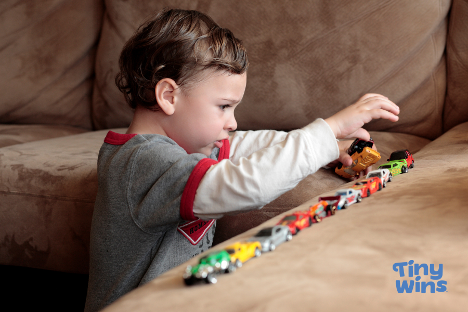
- Repetitive behaviors such as hand flapping, rocking, spinning in circles, or lining up toys
- Reduced pretend play or imaginative play
By 12 months, children should respond to their name and use gestures such as waving. Repetitive patterns of behavior, interests, or activities are characteristic features of autism spectrum disorder and help in identifying autism in toddlers.
Sensory sensitivities are also common autism symptoms in toddlers, involving strong reactions to sounds, textures, or bright lights. These autism symptoms often appear between 12 and 24 months and can be categorized into social communication challenges and repetitive behaviors. They may become more noticeable as social demands increase.
Communication indicators of autism include delayed speech and echolalia (repeating words or phrases). Social communication challenges include not responding to their name, poor eye contact, and limited facial expressions.
A key difference between typical development and early signs of autism is how a child plays. For example, when a child plays with a toy car, most children will roll it, make sounds, or include it in pretend play. A child showing signs of autism may focus on spinning the wheels or arranging the toy car with certain objects repeatedly. Repetitive movements in children with autism can include hand flapping or spinning in circles. Loss of previously acquired language or social skills can be a sign of autism at any age.
Parents should escalate concerns when these behaviors are consistent and affect daily social interaction. If your child shows several early signs, it’s time to speak with a clinician.
Eye Contact and Social Attention
Eye contact is one of the earliest indicators parents notice. Many children naturally look at caregivers to share experiences, follow pointing, and seek connection.
Children showing early signs of autism may have reduced eye contact or avoid it altogether. Poor eye contact doesn’t mean a child never looks at you. It means they do it less often or without clear social intent.
Simple ways to observe social attention include:
- Call your child’s name and see if they respond
- Point to something interesting and check if they follow your gaze
- Watch if they try to share excitement with you
If a child has little interest in paying attention to others, it may signal differences in social communication.
Language Delays and Communication Skills
Language delays are one of the most common concerns. Some children show delayed speech, while others may develop spoken language but use it differently. Parents should track:
- First words
- Two word phrases
- Use of spoken language for communication
Children with autism spectrum disorder may have speech delays, repeat words, or struggle with communication development. They might echo phrases instead of using language meaningfully. Nonverbal communication is just as important. Watch for gestures like wave goodbye or other gestures.
From experience working with families through Tiny Wins, many parents initially focused on feeding struggles also mention delayed speech, unusual reactions, or challenges in social situations. These small overlaps often lead to bigger conversations about a child’s development.

Developmental Milestones vs. Early Signs of Autism
Understanding developmental milestones helps parents spot differences early.
Typical milestones (6–36 months):
- Smiling and making eye contact
- Responding to name
- Using simple words
- Engaging in pretend play
- Showing interest in social interaction
Concerning signs:
- Loss of previously learned skills
- Plateau in communication development
- Lack of social interaction
- Persistent deficits in social communication
Regression is especially important. If a child stops using words, loses social skills, or shows reduced social interaction, it should be addressed immediately.
Comparing to Other Children: Variability and When to Act
Parents often compare their child to other children. While natural, many children develop at different rates. Consistent differences in social skills, communication skills, and behavior should not be ignored. Instead, use structured developmental screens rather than guessing.
Screening and Early Identification Tools
Early identification improves outcomes. The modified checklist for autism in toddlers (M-CHAT-R) is widely used. Parents can complete the checklist and share results with their child’s doctor. These tools highlight behaviors listed that may need further evaluation. Research shows early detection leads to earlier support, which significantly improves outcomes.
Autism Diagnosis Process: Evaluation and Next Steps
An autism diagnosis involves a comprehensive evaluation, including:
- Developmental history
- Behavioral observation
- Standardized assessments
Specialists may refer to the diagnostic and statistical manual, published by the American Psychiatric Association, which classifies autism spectrum disorder under mental disorders. Some children may also be evaluated for related conditions such as intellectual disability, anxiety disorders, fragile x syndrome, or rett syndrome. A multidisciplinary approach ensures an accurate understanding of a child’s needs.
Supporting a Child’s Development Before and After Diagnosis
Parents can encourage growth by creating a nurturing environment supporting communication, social interaction, and play. Simple activities—like reading together, playing interactive games, or encouraging expression through words or gestures—help build foundational skills. Paying attention to a child’s interests and responding to attempts at communication fosters connection and trust.
After diagnosis, parents remain central to progress. Working closely with therapists, teachers, and healthcare providers ensures children receive the right support. Celebrate every milestone, no matter how small, and remember progress may look different for each child on the autism spectrum.
If You Suspect Autism: Practical Steps for Parents
- Schedule a screening with your child’s doctor
- Keep a two-week log of behaviors and developmental milestones
- Request referrals for specialists
Early warning signs matter, and acting early can make a big difference.

Early Intervention and Support After Diagnosis
Early intervention may include:
- Speech therapy for language delays
- Occupational therapy
- Behavioral support
Starting support early can significantly improve outcomes for children on the autism spectrum.
FAQs and Common Concerns
Does delayed speech always mean autism?
No. Delayed speech can happen for many reasons, but when combined with other signs, it should be evaluated.
What is the earliest reliable age for diagnosis?
Some children are diagnosed as early as 18 months, though many receive diagnosis later.
How do I talk to my family about concerns?
Focus on observable behaviors and share specific examples rather than labels.
Special Considerations: Presentation Across the Autism Spectrum
Autism spectrum disorder can present differently based on age and gender. Girls may show subtler early signs and develop coping strategies that mask challenges in social situations. Monitor changes over time rather than relying on one-time observations.
Resources and Next Steps for Parents
Parents can refer to:
- Screening tools like the modified checklist
- Guidance from the American Psychiatric Association
- Recommendations from disease control organizations
- A helpful next step is scheduling a developmental screening with your child’s doctor.
Final Thoughts
Recognizing early signs of autism in toddlers can feel overwhelming, but knowledge gives parents the power to act. Children grow and develop in unique ways, but consistent signs of autism should never be ignored. Early detection, early identification, and early intervention can improve outcomes and help children thrive.
From our experience working closely with families through Tiny Wins, the smallest observations often matter most. A parent noticing how their child plays, communicates, or reacts during everyday routines can be the first step toward meaningful support.



Leave a comment
This site is protected by hCaptcha and the hCaptcha Privacy Policy and Terms of Service apply.