
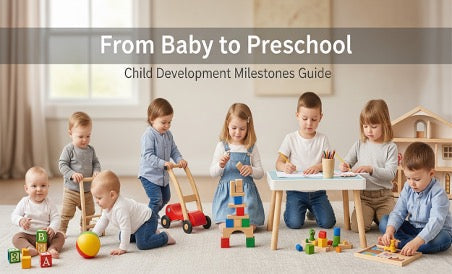

Every parent wonders, “Is my child on track?” Watching a baby grow, a toddler explore, or a preschooler learn new skills can be both exciting and a little nerve-wracking. Understanding child development milestones can help you know what to expect, support your child’s growth, and recognize when to act early if needed. This guide aims to give practical, age-based insights and strategies for supporting your child’s physical, emotional, and cognitive development.
This article covers children from 2 months to 5 years, offering guidance for parents, caregivers, and families who want to track progress, encourage learning, and create supportive routines.
Overview Of Developmental Milestones And Child’s Development
Developmental milestones are skills or behaviors most children can do by a certain age. They are the benchmarks that help parents and pediatricians understand how a child’s brain, body, and emotions are developing.

Main Milestone Domains
A child’s development unfolds across several areas:
- Physical / Motor Skills: Crawling, walking, grasping toys, throwing a ball.
- Cognitive Skills: Problem-solving, recognizing objects, learning concepts.
- Language / Communication: Babbling, first words, forming sentences.
- Social / Emotional Skills: Sharing, playing games, expressing emotions.
While milestones are helpful guides, remember that every child grows at their own pace. Some children walk earlier than others, while others may develop language skills faster. These differences are usually normal and expected.
Individual Variation In Child’s Development
Parents often compare their child to other children, but it’s important to keep in mind that development happens at different rates. Genetics, environment, nutrition, and family interactions all influence a child's growth and development. Tiny Wins, through their experience helping parents add nutrient-rich foods into everyday meals, has seen firsthand how proper nutrition can support children’s physical and cognitive growth, giving kids the energy they need to explore and learn.
How The Child Grows: Measuring Child’s Growth And Development
Tracking a child's growth is an important part of understanding overall development. Growth is often measured using growth charts that track height, weight, and head circumference over time.

Using Growth Charts
Growth charts provide visual guidance for how your child grows compared to most children of the same age. Pediatricians use these charts to monitor trends rather than focusing on single measurements. For example, a child may be small for their age but still follow a consistent growth curve, which is usually a positive sign.
Factors That Influence Growth
Many elements affect how a child grows:
- Nutrition and hydration
- Physical activity and play
- Sleep patterns
- Genetics
- Health conditions or illnesses
When To Record Growth Measurements
Growth is typically recorded at routine pediatric visits, but parents can also monitor at home by noting height, weight, and head circumference during milestones check-ins. Regular monitoring helps identify developmental concerns early and provides useful context for discussions with your child’s doctor.
Developmental Screening And When To Act Early
Developmental screening is a structured way to check if a child is reaching milestones across key areas.
Recommended Screening Schedule
Pediatric guidelines suggest screening at: 9 months, 18 months, and 24 or 30 months. Screening may also occur at well-child visits if parents or caregivers notice delays.
Request Screening If Concerned
If your child is not reaching all the milestones for their age, or if there are concerns about language, motor skills, or social-emotional development, it’s appropriate to request a screening. Acting early can help ensure your child receives the right support.
Act Early On Persistent Delays
Even small delays, when persistent, should be addressed. Early interventions such as speech therapy or occupational therapy can make a significant difference in a child's development outcomes.
Age-Based Milestones: From 2 Months To 5 Years
Your Baby At 2 Months: Early Developmental Milestones
Social Milestones:
- Smiles in response to parents
- Recognizes familiar faces
- Begins cooing and making different sounds
Motor Control Milestones:
- Holds head up briefly while on tummy
- Begins tracking objects with eyes
- Opens and closes hands
Simple games like peek a boo or gently pat a cake help your baby start connecting with you and the world.
Your Baby At 4 Months: Developmental Milestones
Vocalization & Interaction:
- Makes sounds in response to your voice
- Laughs and shows enjoyment
- Begins to express emotions
Reaching & Grasping:
- Reaches for toys and objects
- Brings hands to mouth
- Starts to roll over from tummy to back
Offering soft, colorful toys and gentle interaction during play can help your child learn cause and effect, enhancing early cognitive skills.
Your Baby At 6 Months: Developmental Milestones
Babbling & Sound Recognition:
- Babbles with different sounds
- Recognizes familiar voices
- Responds to their name
Sitting & Reaching:
- Sits with minimal support
- Reaches and transfers objects between hands
- Explores objects by touching and mouthing
Tiny Wins’ experience shows that introducing nutrient-rich foods in simple routines supports sustained energy for these exploratory behaviors.

Your Baby At 9 Months: Developmental Milestones
Mobility & Stranger Awareness:
- Crawls or scoots on the floor
- Shows caution around strangers
- Pulls to stand
Object Permanence Play:
- Enjoys peek a boo and hiding objects
- Searches for hidden toys
- Engages in simple interactive games
These milestones encourage problem-solving and the start of social interactions with family members.
Your Child Around 12 Months: Developmental Milestones
Communication & Movement:
- Says first words, like “mama” or “dada”
- Stands alone or takes a few steps
- Begins pointing to objects or body parts
Recommended Play Routines:
- Daily reading and playing games like pat a cake
- Encouraging imitation through simple household chores
- Talking to your child throughout everyday things like meal prep
Your Toddler At 18 Months: Developmental Milestones
Walking & Early Language:
- Walks independently
- Uses simple words and gestures
- Begins two-word phrases
Independent Play & Pointing:
- Plays alone briefly
- Points to body parts or objects of interest
- Enjoys simple games with parents
Interactive games like rolling a large ball or stacking blocks help your toddler develop coordination and early problem-solving skills.
Your Toddler At 2 Years: Developmental Milestones
Vocabulary & Motor Skills:
- Vocabulary expands rapidly (50+ words)
- Runs, kicks, climbs stairs with help
- Begins simple self-care routines
Problem-Solving Skills:
- Matches shapes or colors
- Stacks objects
- Follows simple directions like “bring the toy”
Parents can help your child learn these skills through guided play and everyday routines like sorting laundry or putting away toys.
Your Child At 3 Years: Developmental Milestones
Conversational Skills:
- Engages in back-and-forth conversations
- Uses 3–4 word sentences
- Understands simple questions
Social Play & Sharing:
- Plays games with peers
- Begins to take turns
- Shares toys with guidance
Pretend play and storytelling help children explore emotions, perspective-taking, and imagination.
Your Child At 4 Years: Developmental Milestones

Imaginative Play & Storytelling:
- Tells short stories using imagination
- Participates in role-play with peers
- Recognizes body parts and actions
Time & Sequence Understanding:
- Understands basic concepts like today, tomorrow
- Follows multi-step instructions
- Engages in simple chores like putting toys away
Parents can boost skills by encouraging play, reading together, and playing games that include sequencing.
Your Child At 5 Years: Developmental Milestones
School-Readiness & Communication:
- Communicates clearly
- Recognizes letters, numbers, and colors
- Follows instructions

Self-Care & Following Rules:
- Dresses independently
- Brushes teeth with help
- Can follow rules during structured activities
Encouraging structured play, reading routines, and everyday things like cleaning up fosters independence and responsibility.
Activities To Support Growth And Development
Motor Skills:
- Throwing, catching, and rolling a large ball
- Dancing, climbing, or outdoor play
Language Skills:
- Daily reading and storytelling
- Naming body parts and objects during play
- Singing songs and rhymes like pat a cake
Emotional & Social Skills:
- Encouraging sharing and turn-taking in games
- Modeling emotions and discussing feelings
- Role-playing and pretend play
Tracking Tools, Resources, And Developmental Screening
- Use CDC milestone checklists for age-based guidance
- Download milestone-tracking apps to record progress
- Bring your checklist to pediatric visits to discuss child's development
Keeping notes helps parents communicate concerns clearly and ensures timely interventions.
When To Seek Specialist Referral For Child’s Development
Referral is advised if:
- Persistent delays in multiple areas
- Limited speech or communication
- Challenges with motor coordination or social interaction
Specialists to consider:
- Speech therapy for language delays
- Occupational therapy for motor skills
- Developmental pediatricians for overall guidance
Following through on appointments ensures children get the support they need early.
Communicating About Your Child’s Growth And Development
Parents can take an active role by:
- Preparing notes for pediatric visits
- Documenting observed concerns and examples of child learn behavior
- Requesting developmental screening results from providers
Being informed and proactive helps support your child’s well being and encourages confidence in developmental progress.
Celebrate Every Step: Nurture Your Child’s Growth, Support Their Milestones, and Enjoy the Journey Together
Understanding child development milestones is one of the most practical ways to support your child’s growth. Each child progresses at their own pace, and while comparisons are natural, they are rarely helpful. Parents can enhance development through play, reading, and structured routines while keeping an eye on changes that may require developmental screening or intervention.
From Tiny Wins’ experience, incorporating nutrient-rich, easy-to-mix foods into daily meals supports children’s energy, focus, and overall growth, giving families the tools to nurture both the body and mind. Watching your child reach each milestone, laugh, explore, and learn is an incredible journey—one best supported by warmth, patience, and encouragement.



Leave a comment
This site is protected by hCaptcha and the hCaptcha Privacy Policy and Terms of Service apply.