

Quick Summary
Choose sweet or savory toddler food blends by matching them to the meal your child already finishes: sweet blends mix into yogurt, oatmeal, and applesauce, while savory blends mix into soups, sauces, and pasta. Most families land on the combo pack, which covers breakfast through dinner.
- Each single blend bag offers 60 servings at $49.95, while the combo pack gives 120 total for $89.90.
- Compare blends on the added sugars line, not the total sugars line, and aim for 0 g added sugar.
- Add the second blend once the first is routine, typically after two to three weeks.
- Toddlers may need eight to fifteen exposures to a new flavor before accepting it.
- Read the first five ingredients, since ingredients appear by weight and should lead with produce.
Table of Contents
- Sweet vs Savory Toddler Food Blends: The Quick Comparison
- What Goes Into Toddler Food Blend Ingredients
- Added Sugar in Toddler Snacks: What the Label Won't Tell You
- Matching the Blend to Your Toddler's Meals and Appetite
- Texture, Allergens, and Choking Risks to Check First
- Healthy Toddler Snack Ideas for Sweet and Savory Blends
- Toddler Picky Eating Tips for Building Flavor Acceptance
- Choose Your Blend: Sweet, Savory, or Both
- Frequently Asked Questions
Sweet vs Savory Toddler Food Blends: The Quick Comparison
Choosing between sweet and savory toddler food blends comes down to one question: which foods does your child already accept?
Toddler food blends are fine powders made from real fruits and vegetables that mix into food your child already eats. The right pick depends on their menu, not on which flavor sounds healthier.
Here is the short version:
Feature |
Sweet Blend |
Savory Blend |
Combo Pack |
|---|---|---|---|
Best mixed into |
Yogurt, oatmeal, pancakes, smoothies, applesauce |
Soups, sauces, pasta, savory meals |
Any of the above |
Made from |
Real fruits and whole-food ingredients |
Real fruits and vegetables |
Both blends |
Servings per bag |
60 |
60 |
120 total |
Price |
$49.95 |
$49.95 |
$89.90 |
Best for |
Breakfast and snack routines |
Lunch and dinner routines |
Families covering every meal |
Most families land on the combo pack, and we will explain why below.
What Goes Into Toddler Food Blend Ingredients
A toddler food blend should list recognizable fruits and vegetables, with no artificial colors, flavors, or added sugar.
Our Sweet Blend is made with real fruits and whole-food ingredients. The Savory Blend uses real fruits and vegetables.
Ingredients appear by weight, so a blend that leads with a starch or sweetener is not the same product as one that leads with produce.
Added Sugar in Toddler Snacks: What the Label Won't Tell You
Added sugar hides behind dozens of names. On a toddler food blend label, scan for syrups (corn, brown rice, tapioca, agave), fruit juice concentrate, cane juice or cane syrup, dextrose, maltodextrin, and anything ending in "-ose." Any of these means sweetener was added during processing rather than arriving with the produce.
Natural sugars from fruit are different: a blend built from real produce carries the sugar that came with the fruit, not sugar poured in afterward.
The FDA guidance on added sugars in nutrition labels explains how added sugars must be declared separately, which makes the panel easier to read than it was a few years ago. Check that line first, then check the serving size it refers to.
A label-reading checklist for sweet and savory blends
Use the same five checks on every bag, in this order:
- Serving size. A blend listing 1 teaspoon per serving is not comparable to one listing 1 tablespoon. Normalize everything to the amount you would actually stir into a yogurt cup or a bowl of pasta.
- Added sugars. Aim for 0 g on this line. If it is not zero, note how many grams per realistic serving.
- Sodium. Watch savory blends especially: vegetables like carrots and beets carry natural sodium, and some manufacturers add salt. Look for no added salt and compare milligrams per serving.
- Fiber and protein. These are what make a snack filling. A blend with more fiber and protein per serving does more work toward satiety than one that is mostly fruit powder.
- First five ingredients. Ingredients appear by weight, so a blend that leads with a starch, maltodextrin, or sweetener is not the same product as one that leads with produce.
Sweet versus savory, side by side on the panel
A direct comparison is more useful than treating all blends alike:
What to check per realistic serving |
Sweet blend |
Savory blend |
|---|---|---|
Added sugars |
Should be 0 g; fruit provides the sweetness |
Should be 0 g; no syrups or juice concentrate |
Sodium |
Usually low; verify no added salt |
Watch closely; compare mg across brands |
Fiber |
Varies with fruit and veg content |
Often higher from vegetables and legumes |
Protein |
Usually low unless dairy or seeds are added |
Often higher if legumes or seeds are included |
First ingredient |
Should be a real fruit or vegetable |
Should be a real vegetable or legume |
Allergens |
Check for dairy and tree nuts in "cream" or "nut" blends |
Check for soy, wheat, and dairy in savory mixes |
Our blends contain no artificial ingredients or added sugar, a deliberate choice because a nutrient booster that quietly adds sweetener defeats the purpose. The savory blend is built from real vegetables without added salt, matching the sweet one's standard.
A bag labeled "fruit and veggie" can still be mostly filler; if the produce sits near the bottom of the list, you are paying for packaging. Read the first five ingredients, then use the checklist above to compare sweet and savory options on equal footing.
Matching the Blend to Your Toddler's Meals and Appetite
Start with the meal your child actually finishes. If breakfast is reliable, a sweet blend earns its place there; if dinner goes down without a fight, go savory. Most toddlers do not eat reliably at every meal, so match the blend to the pattern.
A decision matrix for sweet versus savory
Score your toddler's week honestly, then match the blend to the pattern rather than to the ideal.
Your toddler's pattern |
Start with |
Why |
|---|---|---|
Eats breakfast well, skips dinner |
Sweet |
Reinforce the reliable meal first; add savory later through sauces |
Eats dinner well, grazes at breakfast |
Savory |
Meet the meal that already works; use sweet blends in snack plates |
Grazes all day, rarely sits for meals |
Sweet |
Sweet blends fit yogurt cups, applesauce, and snack plates more naturally |
Prefers warm, sit-down meals |
Savory |
Soups, sauces, and pasta are the smoother entry point |
Eats well at every meal but narrow variety |
Both |
Use each blend to widen the flavor range without changing routine |
Refuses most foods, safe list under five items |
Whichever matches the safe list |
Protect trust at the table before expanding |
Matching by meal, not by flavor preference
Sweet and savory are tools that fit different meals, not personality types. A sweet blend disappears into yogurt, oatmeal, pancakes, smoothies, and applesauce; a savory blend disappears into soups, sauces, pasta, scrambled eggs, mashed potatoes, and mild chili or lentil soup.
A common mistake is buying for the meal you wish your child would eat. Buy for the meal they do eat, then expand.
Appetite, portion, and the small-stomach reality
Toddlers eat in small, frequent bursts, so a full serving of vegetables at one sitting is unrealistic. A toddler serving is roughly a quarter to a half of an adult portion, and a blend lets you spread that nutrition across foods they already accept instead of demanding it all at one meal.
Appetite shifts week to week: a toddler who eats a big lunch on Monday may pick at lunch on Tuesday. Keeping both blends on hand lets you follow the appetite instead of forcing a flavor that does not fit the day.
When to switch or add the second blend
Add the second blend once the first is routine, typically after two to three weeks, and your toddler has accepted it in at least two base foods. If a sweet blend works in yogurt but not oatmeal, that is still progress; add savory to a dinner base before pushing sweet further. If your child refuses both blends in every base, check texture and dose before buying more, because the problem is usually the base food, not the flavor.
Sweet & Savory Blends - Best of Both Worlds →
Texture, Allergens, and Choking Risks to Check First
Texture is the dealbreaker for sensory-sensitive kids.
Our blends are designed to disappear into meals without changing taste or texture.
Allergens come next. Read the full panel for milk, egg, soy, wheat, and tree nut declarations, and check whether the facility handles those ingredients.
Choking risk sits with the food, not the powder. The CDC guidance on choking hazards for young children outlines the foods to modify or avoid by age.
Watch out: never add powder to a bottle or a thickened liquid without checking with your pediatrician, since consistency changes can affect how a toddler swallows.
Healthy Toddler Snack Ideas for Sweet and Savory Blends
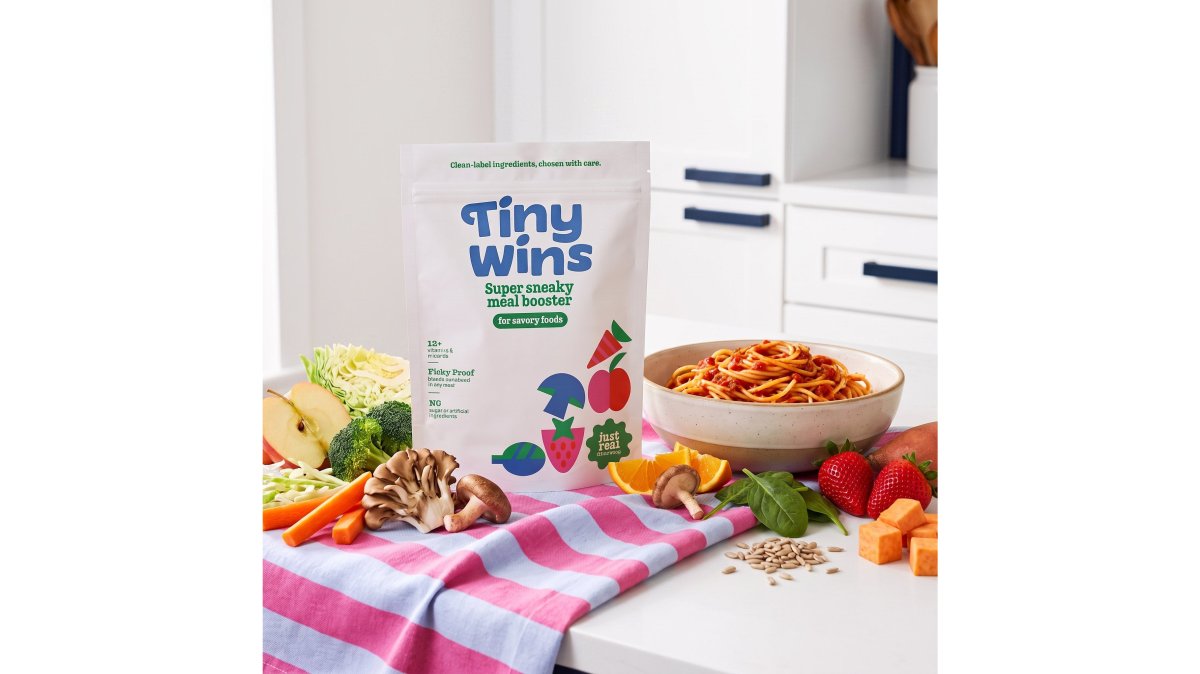
Healthy toddler snack ideas work best when they pair a familiar base with one new nutrient source. Keep the base the same for a week, then rotate what goes into it.

Sweet blend pairings:
- Full-fat yogurt with mashed berries
- Oatmeal with cinnamon and applesauce
- Pancakes or waffle strips
Savory blend pairings:
- Tomato or butternut squash soup
- Pasta with mild sauce
- Scrambled eggs
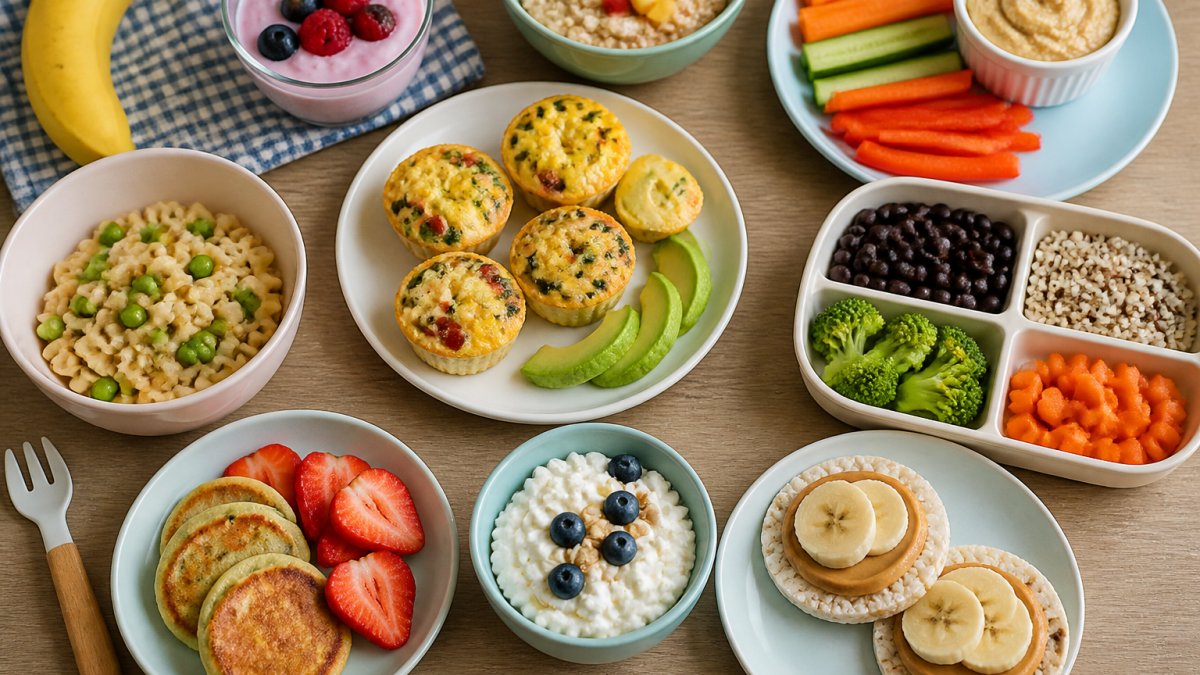
For a longer list of quick options, our healthy toddler snack ideas collection covers 30 simple snacks built around foods most toddlers already accept.
Toddler Picky Eating Tips for Building Flavor Acceptance
Repetition beats persuasion.
Never hide the blend and lie about it. Mix it in quietly, yes, but if your child asks, tell them the truth in simple terms.
If mealtime stress is the bigger problem, our guide to picky eater toddler tips covers what to do and what to avoid during meals.
Texture exposure counts as progress. A toddler who licks a new food, or touches it, is moving forward even without swallowing.
Choose Your Blend: Sweet, Savory, or Both
The honest answer for most families is both. Sweet covers breakfast and snacks, savory covers lunch and dinner, and together they close the gap across an entire day of eating.
If you want to start with one, pick the meal your toddler reliably finishes. You can view the sweet blend for yogurt, oatmeal, and smoothie routines, or the savory blend for soups, sauces, and pasta nights.

The Sweet and Savory Blends combo gives you 60 servings of each, 120 total, at $89.90.

Every toddler goes through weeks where the safe-food list shrinks to three items and dinner turns into a negotiation. Tiny Wins was built for exactly those weeks. Our whole-food blends mix into foods your child already loves without changing taste, texture, or routine, and every batch is third-party tested for purity, heavy metals, and microbes. Start with the combo pack and cover breakfast through dinner, or pick the single blend that matches your child's menu.
Frequently Asked Questions
Is sweet or savory food healthier for toddlers?
Neither is healthier by default. What matters is what the blend is made from and what it is added to. A savory blend stirred into soup or pasta sauce can balance a meal heavy on carbohydrates, while a sweet blend in plain yogurt adds nutrients without extra sugar. Check the ingredient list for real fruits and vegetables, and confirm the product has no added sugar. The better choice is the one that fits the food your toddler already eats.
Should toddler food blends contain added sugar?
No. Toddlers do not need added sugar, and the Dietary Guidelines for Americans recommend avoiding it for children under 2. Naturally occurring sugars from fruit are different from sugar added during processing. Read the Nutrition Facts panel and the ingredient list: a blend made from real produce should list fruit or vegetable ingredients, not cane sugar, syrup, or fruit juice concentrate. Tiny Wins Sweet Blend is made with real fruits and whole-food ingredients and lists no added sugar.
How do I introduce savory flavors to a toddler who only wants sweet foods?
Start with a savory blend in a food your toddler already accepts, such as pasta sauce, mashed potatoes, or soup, and use a small amount at first. Offer the food alongside a familiar favorite rather than replacing it. Repeated exposure matters more than pressure: serve the same food several times without coaxing. Pairing a new flavor with a familiar texture lowers the barrier, and a tasteless powder lets the savory note come from the food itself rather than a supplement taste.
What should I check before choosing a toddler food blend?
Check four things: the ingredient list (real fruits and vegetables, no fillers or artificial additives), the Nutrition Facts panel for added sugar and sodium, third-party testing for purity and heavy metals, and whether the powder mixes without changing taste or texture. Also confirm the blend suits the foods your child eats, since a savory blend in a smoothie or a sweet blend in soup will not disappear the same way. Tiny Wins blends are third-party tested and designed to mix into the matching food type.
Can a toddler food blend help with picky eating?
A blend can close nutrient gaps while picky eating is being worked on, but it does not replace teaching a child to eat a variety of foods. Use it as a bridge: add it to accepted foods so nutrition holds steady, and keep offering new flavors and textures separately. Tiny Wins products are designed to disappear into foods kids already love without changing taste, texture, or routine, which makes them useful during that process rather than a substitute for it.


Leave a comment
This site is protected by hCaptcha and the hCaptcha Privacy Policy and Terms of Service apply.