
Table of Contents
- Why Sensory Eaters Crave Sugary Snacks
- Crunchy Snacks for Sensory Seekers
- Smooth and Creamy Alternatives to Sugary Snacks
- Low-Sugar Snacks for Picky Eaters
- How to Introduce New Foods to Sensory Eaters
- Protein-Rich and Nutrient-Dense Snack Swaps
- Making Sensory-Friendly Snacks at Home
- Frequently Asked Questions
Why Sensory Eaters Crave Sugary Snacks
For sensory eaters, sugary snack alternatives sensory needs remain unmet when parents don't understand that the sweetness triggers dopamine, texture provides predictable oral stimulation, and familiar flavors remove mealtime uncertainty.
Sensory-sensitive children gravitate toward sugary snacks because they deliver consistent, intense input without complex textures or unexpected flavors. The problem: highly processed options don't support nutritional needs, leaving parents caught between honoring sensory preferences and providing nutrition.
The opportunity lies in finding alternatives to sugary snacks for sensory eaters that satisfy the same sensory needs while delivering nutrition, understanding what sensory input your child seeks, then matching it with whole foods.
Children reaching for sweets repeatedly seek one of three things: intense flavor, a specific texture (crunchy, smooth, chewy), or quick energy. Identify which sensory need drives the craving, then replace sugary snacks with alternatives delivering the same satisfaction.
Crunchy Snacks for Sensory Seekers
Crunchy textures provide intense oral feedback, the sound, resistance, and tactile feedback register as highly stimulating. Offering crunchy whole-food alternatives to sugary snacks for sensory eaters matches that need while eliminating processed sugar.
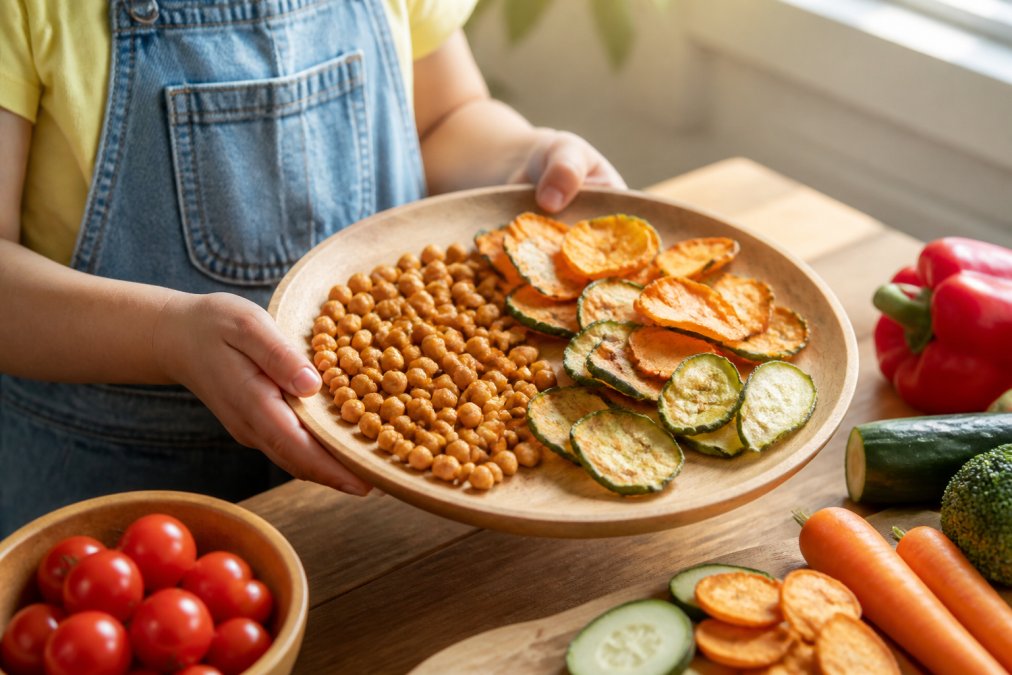
Roasted Chickpeas and Vegetable Crisps
Roasted chickpeas deliver the crunch of candy with protein and fiber, providing sustained energy without blood sugar spikes. Preparation: drain canned chickpeas, toss with oil and salt, roast at 400°F for 25-30 minutes until crispy.
Vegetable crisps, thin slices of beets, carrots, or kale roasted until crispy, provide satisfying texture with minimal ingredients. Many children reject cooked vegetables but accept crispy versions because the texture feels different.
These options satisfy crunch cravings while providing sustained energy and nutrition, protein, fiber, minerals, with equally intense sensory experience.
Nuts, Seeds, and Freeze-Dried Fruit
Nuts and seeds deliver crunch, natural flavors, and sustained energy from healthy fats. Almonds, walnuts, and sunflower seeds offer intense oral stimulation without added sugar.
Freeze-dried fruit bridges candy and whole fruit, concentrated sweetness with candy-like texture. Strawberries, blueberries, or mango provide craved sweetness with fruit nutrition, and unlike fresh fruit, they're consistent and familiar.
Combining nuts with freeze-dried fruit addresses multiple sensory needs, crunch, sweetness, and mixed textures, working well for children needing variety in a single snack.
Smooth and Creamy Alternatives to Sugary Snacks
While some sensory eaters seek crunch, others prefer smooth, creamy textures that feel predictable and calming, a soothing rather than stimulating satisfaction.
Nut Butters and Whole-Food Blends
Nut butters deliver creamy texture with protein and healthy fats. The smooth, predictable consistency with less complex flavor satisfies sensory eaters when served with apple slices, crackers, or straight from the spoon.
Whole-food blends combining nut butters with seeds, coconut, or cacao add nutrition without changing smooth texture, delivering indulgent sensory experience with nutritional density.
Nut butters work as a vehicle for hidden nutrition, a spoonful mixed with Tiny Wins Sweet Blend delivers nutrients without changing texture or taste, masking the supplement while providing familiar experience.

Frozen Yogurt and Fruit Skewers
Frozen yogurt offers cold, smooth sensation many sensory eaters find calming. Plain Greek yogurt on a stick provides protein, probiotics, and creamy texture, unlike ice cream, delivering nutrition while satisfying sensory cravings.
Fruit skewers alternating soft fruit with coconut chunks or granola create structured, predictable texture variation. Threading fruit onto a stick makes the snack feel more intentional than a bowl, which matters for sensory-preference children.
Layering frozen yogurt with crushed nuts or seeds creates additional texture interest without overwhelming sensory-sensitive eaters. The familiar base (yogurt) stays consistent while subtle additions create complexity.
Sweet & Savory Blends - Best of Both →
Low-Sugar Snacks for Picky Eaters
Picky eating and sensory sensitivity often overlap. A child with restricted food preferences needs snacks that fit within their accepted foods while providing nutrition. Low-sugar alternatives to sugary snacks for sensory eaters focus on foods already accepted, then optimizing them nutritionally.
Many picky eaters have a narrow list of accepted foods. Rather than introducing entirely new snacks, the strategy is to enhance the nutritional value of foods already accepted. If a child eats applesauce, add a scoop of Tiny Wins Sweet Blend to increase vitamin and mineral content without changing taste or texture. If they eat yogurt, mix in nut butter for protein and healthy fats.
This approach respects the child's sensory preferences while closing nutritional gaps. A child eating the same foods they already accept suddenly gets significantly more nutrition per serving. The mealtime battles decrease because nothing about the food changes from the child's perspective.
Low-sugar doesn't mean no sweetness. Natural sweetness from fruit, nut butters, and whole foods provides satisfaction without the blood sugar crashes that come from refined sugar. The goal is finding the child's threshold for sweetness, then meeting it with whole foods rather than processed options.
How to Introduce New Foods to Sensory Eaters
Introducing new sugary snack alternatives sensory eaters will accept requires patience and a structured approach. Sensory-sensitive children often reject new foods immediately based on appearance, smell, or texture alone. Forcing new foods typically backfires, creating stronger food aversions.
Start with Familiar Textures and Flavors
The first rule of food introduction with sensory eaters: begin with foods that match textures already accepted. If a child accepts crunchy foods, introduce new crunchy options. If they prefer smooth foods, start with new smooth alternatives. Matching the texture reduces the sensory barrier to acceptance.
Flavor familiarity matters equally. A child who accepts mild flavors may reject anything with strong tastes. Start with subtly flavored options, then gradually increase complexity only if the child shows acceptance. This might mean introducing plain roasted chickpeas before offering them with spices.
The visual presentation also influences acceptance. Many sensory eaters reject foods based on appearance before tasting.
Use the Gradual Exposure Method
The gradual exposure method works by normalizing new foods without pressure. Place the new food on the child's plate without expectation of eating it. Over multiple meals, simply having the food present reduces the novelty and fear response. Some children need 10-15 exposures to a new food before they'll attempt tasting it.
Protein-Rich and Nutrient-Dense Snack Swaps
Sensory eaters often end up nutritionally deficient because their limited food preferences exclude many whole foods. Swapping sugary snacks for protein-rich alternatives addresses both the sensory need and the nutritional gap.
Making Sensory-Friendly Snacks at Home
Homemade snacks give parents complete control over ingredients, texture, and flavor intensity. This matters enormously for sensory eaters, where even small ingredient changes can affect acceptance.
Energy Balls and Homemade Bars
Energy balls require no baking and come together in minutes. The basic formula: nut or seed butter, dates or other dried fruit, and optional mix-ins like coconut or cacao. Blend the ingredients, roll into balls, and refrigerate. The result is a snack that feels indulgent while delivering actual nutrition.
Boosting Nutrition Without Changing Taste
The single most effective strategy for picky eaters is adding nutrition to foods they already accept. A scoop of Tiny Wins Sweet Blend mixed into applesauce, yogurt, or oatmeal adds significant nutrition without changing taste, color, or texture. The child continues eating the same food they've accepted, but now it delivers substantially more vitamins and minerals.
Snack Type |
Sensory Profile |
Best For |
Prep Time |
|---|---|---|---|
Roasted chickpeas |
Crunchy, salty |
Intense oral input seekers |
35 minutes |
Nut butters |
Smooth, creamy |
Texture-sensitive children |
2 minutes |
Freeze-dried fruit |
Crunchy, sweet |
Sugar cravings + crunch |
0 minutes |
Frozen yogurt |
Cold, smooth |
Calming sensory input |
4+ hours |
Energy balls |
Chewy/smooth |
Portable, customizable |
15 minutes |
Vegetable crisps |
Crunchy, mild |
Vegetable-averse eaters |
30 minutes |
Frequently Asked Questions
What can I replace sugary snacks with for sensory-seeking kids?
Sensory-seeking children often crave sugar because it provides quick texture and taste stimulation. Replace sugary snacks with crunchy alternatives like roasted chickpeas, vegetable crisps, and freeze-dried fruit, or smooth options like nut butters and frozen yogurt. These deliver the sensory experience they're seeking while providing nutrients like fiber, protein, and vitamins. You can also boost nutrition in foods they already eat using whole-food powders that blend seamlessly without changing taste or texture.
How do I introduce new snack textures without causing a meltdown?
Start by placing new textures on their plate without pressure to eat. Let them observe and touch the food first. Gradually expose them to the new snack alongside familiar favorites—this reduces anxiety and allows their sensory system to adjust. Pair unfamiliar textures with foods they already love. Keep portions small and celebrate tiny wins, like touching or smelling the new snack. This low-pressure approach respects their sensory processing needs and builds confidence over time.
Are there healthy snacks that provide the same crunch as processed treats?
Yes. Roasted chickpeas, vegetable crisps, nuts, seeds, and freeze-dried fruit all deliver satisfying crunch without added sugar or artificial ingredients. You can also make homemade crunchy snacks by roasting vegetables with a light coating of oil and salt, or preparing energy balls with nuts and seeds. These whole-food options provide the sensory satisfaction your child craves while delivering fiber, protein, and essential minerals that support growth and development.
How can I support my child's nutrition if they only eat a few sensory-friendly foods?
A restricted diet doesn't mean missing key nutrients. Whole-food nutrient powders designed for picky eaters can blend seamlessly into the foods your child already loves—yogurt, pasta sauce, oatmeal, or smoothies—without changing taste or texture. These powders deliver concentrated vitamins and minerals from real fruits and vegetables in just one scoop. Combined with the limited foods they do eat, this approach bridges nutritional gaps and gives you confidence they're getting essential nutrients for growth and immune support.


Leave a comment
This site is protected by hCaptcha and the hCaptcha Privacy Policy and Terms of Service apply.