

Table of Contents
- What Peace of Mind for Parents Actually Means
- Signs of Nutritional Gaps in Children Every Parent Should Know
- How to Support Child Immunity Naturally
- Best Vitamins for Picky Eaters: What to Look For
- Managing Stress and Caregiver Burnout
- Digital Habits and Emotional Well-Being
- How Tiny Wins Provides Peace of Mind for Parents
- Conclusion
- Frequently Asked Questions
What Peace of Mind for Parents Actually Means
Peace of mind for parents is the quiet confidence that your child's health, nutrition, and emotional well-being are covered, even when nothing goes to plan, not the absence of worry, but systems that catch the gaps.
Signs of Nutritional Gaps in Children Every Parent Should Know
Nutritional gaps in children rarely announce themselves. They show up as small changes in energy, appetite, or mood that parents notice but can't name.
Physical Signs to Watch For
Common physical clues include slow growth compared to peers, frequent illness, dry or flaky skin, brittle nails, thinning hair, and pale coloring around the lips or under the eyes, the last often pointing to low iron, one of the most common deficiencies in young children.
Behavioral and Energy Clues
Behavior often speaks first. A child who was energetic at 4 p.m. last month and now melts down by 2 p.m. may be running on empty. Other clues: trouble concentrating, irritability between meals, and lost interest in physical play.
How to Support Child Immunity Naturally
Supporting child immunity naturally comes down to four inputs: sleep, movement, whole foods, and stress regulation. No supplement replaces them, but each strengthens the others.
Best Vitamins for Picky Eaters: What to Look For
The best vitamins for picky eaters are ones your child will actually take: whole-food sources, independently lab tested, free of the fillers that cause texture and taste problems. Everything else is marketing.
Why Third-Party Testing Matters
Third-party testing means an independent lab, not the manufacturer, verifies what's actually in the bottle. This matters because supplements are regulated differently than medications in the United States. The FDA's guidance on dietary supplement regulation explains that manufacturers are responsible for safety and labeling, but the agency does not approve supplements before they're sold.
Tasteless vs. Flavored Options
Flavored gummies and chewables win on compliance but often carry added sugar, artificial colors, and a taste kids detect once suspicious. Tasteless powders win on stealth, but only if they truly disappear into food.
What to Check |
Why It Matters |
Red Flag |
|---|---|---|
Independent lab testing |
Confirms purity and label accuracy |
"Lab tested" with no lab named |
Whole-food sources |
Nutrients in food form, easier to absorb |
Long list of isolated synthetics |
Added sugar |
Daily sugar load adds up fast |
Sugar or syrup in first 3 ingredients |
Texture after mixing |
Determines whether it gets eaten |
Clumping or visible grit |
Serving size |
Affects cost per day |
Large scoop for small nutrient load |
Managing Stress and Caregiver Burnout
Caregiver burnout is the exhaustion that builds after months of running on worry, and it's under-discussed in families facing feeding challenges or health concerns. The signs are specific: snapping over small things, dreading mealtimes, feeling detached, losing interest in old pleasures. If that sounds familiar, you're not failing, you're depleted.
The Financial Layer Nobody Talks About
Financial anxiety is one of the most reliable predictors of parental stress, and the pillar most wellness content skips. A surprise specialist visit, a therapy co-pay, an allergen-friendly grocery run, an out-of-pocket supplement, these add up in ways a feelings chart never shows.
A few concrete moves that reduce the load:
- Check whether your health plan offers a flexible spending account (FSA) or health savings account (HSA). Many over-the-counter supplements and vitamins qualify for reimbursement with a letter of medical necessity from your pediatrician. That single step can turn a recurring monthly cost into pre-tax dollars.
- Ask your pediatrician's office about cash-pay rates and sliding scales. Many practices publish them only on request, and the difference between the billed rate and the cash rate is often substantial.
- Batch the paperwork. Keep one folder, physical or digital, for explanation of benefits statements, receipts, and denial letters. Appealing a denied claim is far easier when the documents are already in one place.
- Separate the worry from the number. Parents often avoid looking at the total because looking feels worse than not knowing. Naming the actual figure usually shrinks the anxiety by converting vague dread into a solvable problem.
The Logistical Layer
Mental load is real: it consumes the attention you'd otherwise spend on rest. The fix isn't a bubble bath, it's removing decisions.
Sweet & Savory Blends - Best of Both →
- Lower the stakes at one meal per day. Pick breakfast and make it zero-pressure. No coaching, no negotiating, no new foods.
- Assign ownership, not tasks. One parent owns bedtime, the other owns lunches, and neither one renegotiates nightly. Shared ownership of an ambiguous task is how resentment builds.
- Protect one recovery block per week. Even ninety minutes counts. Put it on the calendar the way you'd put a medical appointment.
- Talk to someone who gets it. A therapist, a parent group, or a feeding specialist who works with families like yours. A clinician who has seen a hundred picky eaters will save you months of trial and error.
When to Escalate
Relaxation techniques help at the margins but don't replace support systems. If you're carrying this alone, the fix isn't a breathing exercise, it's asking for help. Ask your primary care provider or your child's pediatrician about caregiver support resources; many health systems have them and rarely advertise.
Digital Habits and Emotional Well-Being
Screen time and emotional well-being are linked more tightly than most families realize. Screens displace sleep, movement, and face-to-face connection, the three things that most reliably stabilize a child's mood.
The Wearable Question Most Parents Haven't Asked Yet
Here's an angle almost no parenting guide covers: the health-tracking tech adults use for stress and sleep is now marketed to families, and it cuts both ways for parental peace of mind.
A practical framework:
- Pick one metric that matters and ignore the rest. If sleep is the concern, look at sleep. Don't also track steps, heart rate variability, and screen time and try to optimize all four.
- Set a check-in cadence, not a check-in habit. Once a week, at a set time, is enough for most families. Multiple times a day is a sign the tool is driving you, not the other way around.
- Involve the child in reading the data. Kids old enough to wear a device are old enough to look at the trend with you. That turns the device into a shared conversation instead of surveillance.
- Know when to take it off. If a device is producing more worry than insight, a two-week break costs nothing and tells you a lot.
Where the Data Should and Shouldn't Go
If you use a wearable or health app with your child, read the privacy policy before syncing. Consumer app health data isn't covered by HIPAA the way data held by your doctor's office is, and many apps share anonymized data with third parties by default. Choose an app that lets you export or delete your child's data, and turn off social or leaderboard features for minors.
How Tiny Wins Provides Peace of Mind for Parents
Tiny Wins exists because getting nutrients into a picky eater shouldn't require a battle. Founded by a single mom of three boys, the brand makes clean, whole-food nutrition products designed to disappear into foods kids already love.
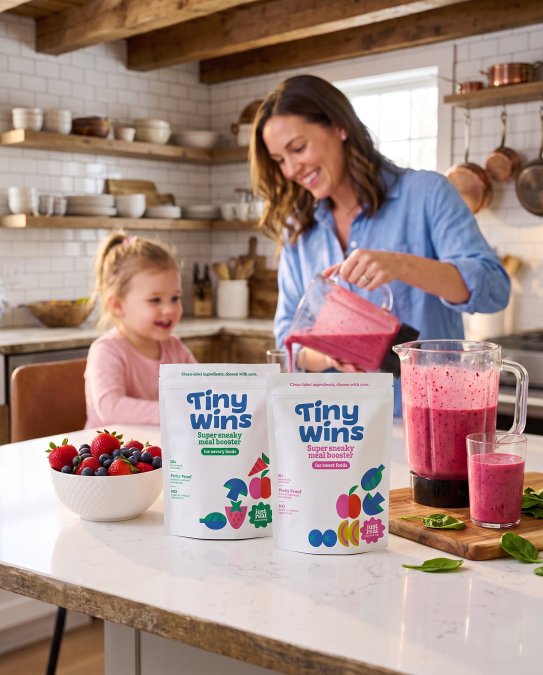
Three things set this apart from the gummy aisle:
- Third-party tested for purity, heavy metals, and microbes
- No artificial ingredients or added sugar, and safe for gluten-free lifestyles
- Ingredients recognized as GRAS by the FDA, with the formula recommended by 300+ physicians on FrontRowMD
Conclusion
The hardest part of parenting a picky eater isn't any single meal, it's the cumulative worry that you're missing something and won't notice until it matters. That worry is manageable with a system: watch the signals, protect sleep and movement, choose a verified supplement, and guard your own reserves.
Frequently Asked Questions
What are the signs that a child needs a vitamin supplement?
Common signs of nutritional gaps in children include fatigue, frequent colds, poor appetite, slow growth, and brittle hair or nails. Picky eaters who avoid entire food groups like vegetables or proteins are at higher risk. A pediatrician can confirm deficiencies through blood work. If your child consistently refuses fruits, vegetables, or whole-food sources of key vitamins, a third-party tested supplement can help bridge the gap without changing mealtime routines.
How can parents ensure their children are getting proper nutrition?
Focus on offering balanced meals with fruits, vegetables, proteins, and whole grains, but accept that picky eaters may not eat everything. Track what your child eats over a week rather than a single day. For consistent gaps, a tasteless whole-food powder like Tiny Wins Sweet Blend or Savory Blend can be mixed into foods they already love, delivering at least 50% of the Daily Value of key vitamins without altering taste or texture.
What role does gut health play in a child's overall wellness?
Gut health affects digestion, immunity, mood, and energy. A diverse diet rich in fiber and whole foods supports a healthy microbiome. For children with restricted diets, nutrient gaps can weaken gut bacteria balance. Whole-food supplements made from real fruits and vegetables provide fiber and phytonutrients that support digestive health. Tiny Wins blends include over 14 fruits, veggies, and superfoods, offering a convenient way to add gut-friendly nutrients to everyday meals.
How can busy families simplify their daily health routines?
Simplify by focusing on small, consistent habits rather than overhauling everything at once. Keep a stash of pre-portioned supplements, prep easy grab-and-go snacks, and use products that fit into foods your child already eats. Tiny Wins Meal Booster for Sweet Foods and Savory Blend dissolve into yogurt, oatmeal, soups, and sauces in seconds. A 60-serving bag lasts two months, making it a low-effort addition to any routine.



Leave a comment
This site is protected by hCaptcha and the hCaptcha Privacy Policy and Terms of Service apply.