
Table of Contents
- Why Clean Supplements for Toddler Nutrition Matter
- Signs of Nutritional Gaps in Toddlers
- How to Choose a Clean Children's Vitamin
- Whole-Food Powders vs. Gummies and Liquids
- Tiny Wins Sweet & Savory Blends: A Clean Option for Picky Eaters
- Talking to Your Pediatrician Before Starting Supplements
- Frequently Asked Questions
Why Clean Supplements for Toddler Nutrition Matter
Toddlers are notoriously unpredictable eaters, and the gap between what they need and what they actually consume can widen fast. Clean supplements for toddler nutrition exist to close that gap without introducing unnecessary additives, fillers, or synthetic compounds into a small body that is still developing.
At Tiny Wins, we built our entire product line around this exact problem: parents who want to nourish their kids properly but face daily resistance at the table.
The term "clean" gets thrown around loosely in the supplement industry. A working definition helps: clean supplements are products made from recognizable, whole-food sources, free from artificial colors, sweeteners, and unnecessary fillers, and verified by independent testing for purity. That last part matters most, and it is where many brands quietly cut corners.
Signs of Nutritional Gaps in Toddlers
The clearest signs of nutritional gaps in toddlers are subtle and easy to dismiss: fatigue that seems excessive, frequent illness, pale skin, poor appetite, and stalled growth. These signals rarely appear alone, and they rarely appear dramatically.
Many parents notice behavioral shifts first. A toddler who was previously energetic becomes clingy or irritable. Concentration drops. Mealtimes, already difficult, get worse.
Physical markers can include brittle hair, slow wound healing, and cracks at the corners of the mouth. Growth charts are your friend here. A toddler who drops percentiles over two consecutive checkups is worth a conversation with a pediatrician, not a guess.
How to Choose a Clean Children's Vitamin
Choosing a clean children's vitamin comes down to four checks: third-party testing, ingredient sourcing, added sugar content, and nutrient form. Skip any one of these and you are guessing.
Start with the testing question. A COA, or Certificate of Analysis, is the document that proves a batch was tested for heavy metals, microbes, and potency. If a brand will not share one, that tells you something.
Then read the label backward. Look for what is not there: no artificial sweeteners, no synthetic dyes, no magnesium stearate or silicon dioxide used purely as flow agents. Fewer ingredients is usually better.
Finally, check the nutrient form. Fat-soluble vitamins like A, D, E, and K absorb better with dietary fat. Water-soluble vitamins like C and B-complex pass through the body faster, so timing matters less.
Third-Party Tested Vitamins for Kids
Third-party tested vitamins for kids carry verification from an independent lab, not the manufacturer's own quality team. That distinction is the whole point.
The most recognized certifications in this space include NSF Certified for Sport, USP Verified, and ConsumerLab approval. Each tests for different things, so it helps to know what you are actually looking for: heavy metals, microbial contamination, label accuracy, or all three.
FDA guidance on dietary supplement regulation clarifies that supplements are regulated as food, not drugs, which means pre-market approval is not required. That is precisely why independent testing matters so much.
Sugar, Additives, and Bioavailability
Gummy vitamins for kids often contain more sugar than parents expect. Some list glucose syrup or cane sugar as the first or second ingredient, which means the "vitamin" is largely a candy delivery system.
Bioavailability, or how much of a nutrient the body actually absorbs, varies widely between synthetic and whole-food based nutrients. Some synthetic forms absorb well; others pass through largely unused. Whole-food sources tend to include cofactors that support absorption.
This is the gap most guides miss: a label can list 100% of the Daily Value and still deliver far less to your child's cells.
Sweet & Savory Blends - Best of Both →
Form |
Typical Sugar Content |
Bioavailability Notes |
Best For |
|---|---|---|---|
Gummy vitamins |
Often high, sometimes first ingredient |
Synthetic forms, variable absorption |
Kids who refuse all other formats |
Liquid drops |
Usually none |
Good for fat-soluble vitamins with food |
Infants and young toddlers |
Whole-food powders |
None added |
Nutrients from real food with cofactors |
Picky eaters, sensory-sensitive kids |
Whole-Food Powders vs. Gummies and Liquids
Whole-food powders beat gummies and liquids on three fronts: no added sugar, no texture conflict, and nutrients delivered from real food sources rather than isolated synthetics.
The texture issue is the one parents of sensory-sensitive kids care about most. A gummy has a chew. A liquid has a taste. A fine powder mixed into a familiar food disappears entirely, which is the entire point.
Liquid drops work well for babies and very young toddlers, but many kids develop opinions about taste around age two. Powders sidestep that window completely.
The trade-off is real: powders require you to actually mix them into food, which adds a step. Gummies are grab-and-go. If your child will eat a gummy without a fight and you have checked the sugar content, that is a legitimate choice.
Tiny Wins Sweet & Savory Blends: A Clean Option for Picky Eaters
Tiny Wins makes whole-food nutrition powders designed to disappear into food your child already eats. The lineup includes a Sweet Blend for yogurt, oatmeal, pancakes, and smoothies, a Savory Blend for soups, sauces, and pasta dishes, and a Sweet & Savory combo pack that covers both.


Each scoop delivers at least 50% of the Daily Value of key vitamins and minerals, sourced from real fruits and vegetables through a specialized extraction process. No artificial ingredients, no added sugar, and no change to taste, color, or texture.
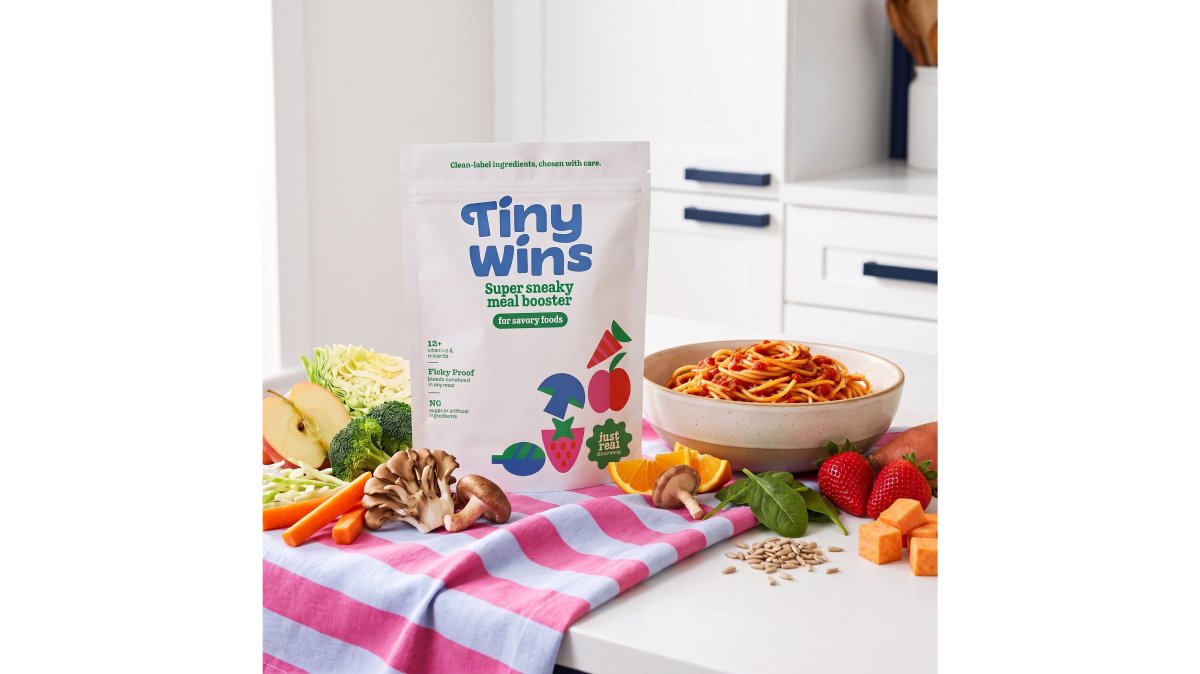
Savory Blend
The blends are third-party tested for purity, heavy metals, and microbes, and are safe for gluten-free lifestyles. The combo pack provides 120 total servings across both bags, which works out to roughly two months of daily use for one child.
For parents whose kids eat a narrow rotation of chicken nuggets, pasta, and fruit, this format is built for exactly that reality. You are not asking your child to try something new. You are adding nutrition to something they already trust.
Talking to Your Pediatrician Before Starting Supplements
A pediatrician visit before starting any supplement is not a formality. It is how you find out whether your child actually needs one, and if so, which nutrients matter most.
Bring specifics to the appointment. Note what your child eats in a typical week, any symptoms you have observed, and the supplement you are considering. Ask directly whether bloodwork makes sense.
The American Academy of Pediatrics guidance on supplements recommends a food-first approach, with targeted supplementation where a genuine gap exists. That is a reasonable framework, and it does not conflict with using a clean whole-food powder to bridge a picky-eating phase.
One more thing worth raising: if your child takes any medication or has a diagnosed condition, the conversation changes. Dosage safety is not a one-size calculation.
Frequently Asked Questions
What should I look for in clean toddler supplements?
Look for third-party testing, whole-food sources, and label transparency. Check that the product lists specific vitamins and minerals with amounts, avoids artificial sweeteners or synthetic additives, and carries certifications like non-GMO or organic where possible. A clean children's vitamin should also state the recommended daily allowance it provides and whether it is free from common allergens. If a label does not disclose testing or full ingredients, treat that as a red flag.
Are gummy vitamins safe for toddlers?
Gummy vitamins can be safe if they meet dosage and testing standards, but they often contain added sugar, artificial colors, and may lack key nutrients like iron or calcium. Toddlers may also treat them like candy, increasing overdose risk. If you choose gummies, pick a third-party tested brand with transparent labeling and keep them out of reach. Many parents prefer powder or liquid forms that mix into food and allow more precise dosing.
How can I tell if a toddler supplement is third-party tested?
Look for a certificate of analysis or a seal from independent labs on the label or website. Reputable brands publish which labs they use and what they test for, such as heavy metals, microbes, and potency. If a brand only says 'third-party tested' without naming the lab or showing results, ask for documentation. Third-party tested vitamins for kids give you confidence that what is on the label matches what is in the bottle.
Do toddlers actually need nutritional supplements?
Most toddlers can meet their needs through a balanced diet, but picky eating, restricted diets, or sensory aversions can create nutritional gaps. Signs of nutritional gaps in toddlers include fatigue, frequent illness, poor appetite, or slow growth. A pediatrician can assess whether a supplement is needed. For children with limited food variety, a clean whole-food powder like Tiny Wins can help bridge gaps without changing taste or texture.
How long before I see a difference from a toddler supplement?
It depends on the nutrient and the child. Some parents notice better energy or fewer colds within a few weeks, while improvements in growth or iron levels may take months. Consistency matters more than quick fixes. Track changes in appetite, mood, and sleep, and discuss any concerns with your pediatrician. Supplements support nutrition but do not replace a varied diet or medical care.


Leave a comment
This site is protected by hCaptcha and the hCaptcha Privacy Policy and Terms of Service apply.