

Table of Contents
- Why Probiotics Matter for Picky Eaters
- Signs Your Child May Benefit from Probiotics
- Choosing the Best Probiotic for Kids with Sensitive Stomachs
- Understanding Probiotic Dosage for Children
- How to Hide Supplements in Toddler Food
- Food-Based Probiotic Sources for Picky Eaters
- Troubleshooting Negative Reactions and Building the Habit
- Frequently Asked Questions
Why Probiotics Matter for Picky Eaters
Picky eating creates nutrition gaps. To introduce probiotics picky eaters need, parents must find ways to work them into foods their children already accept.
Probiotics are live beneficial bacteria that support digestive health and immune function (Probiotics: Usefulness and Safety). They help your child's gut microbiome, the community of bacteria living in their digestive system, work better. A healthy gut matters more than most parents realize.
Limited diets mean fewer fermented foods and fiber that feed good bacteria. Probiotics fill that gap, supporting digestive comfort and immune function.
The real challenge is getting picky eaters to take them. When you introduce probiotics picky eaters will actually consume, finding ways to sneak them into foods they already love is essential.
Signs Your Child May Benefit from Probiotics
Watch for these signs your child may benefit from probiotics:
- Frequent constipation or loose stools
- Bloating or gas after meals
- Repeated colds or ear infections
- Skin issues like eczema or rashes
- Stomach discomfort or complaints of tummy aches
- Recent antibiotic use (antibiotics kill good bacteria too)
- Extreme food aversion tied to sensory issues
Sensory-restricted diets mean fewer beneficial bacteria from natural sources. Also watch energy levels, poor digestive health often causes fatigue and crankiness.
Choosing the Best Probiotic for Kids with Sensitive Stomachs
The best probiotic for kids with sensitive stomachs has these features:
Strain diversity matters. Multiple strains (like Lactobacillus and Bifidobacterium) give broader support than single-strain products.
CFU count should match your child's age. CFU stands for colony-forming units, basically, the number of live bacteria. Younger kids (ages 2-5) typically need 1-5 billion CFU daily. Older kids can handle 5-10 billion CFU. Start low and increase gradually.
Shelf-stable powders beat liquids. They mix invisibly into food and stay stable without refrigeration.
Third-party testing is non-negotiable. Your child deserves clean supplements. Look for products tested for purity, heavy metals, and harmful microbes. Tiny Wins products are third-party tested and made with real fruits, vegetables, and whole-food ingredients, no artificial additives or unnecessary fillers.
Taste matters less than you think. The real test is mixing it into your child's favorite food and seeing if they notice.
Avoid added sugar or artificial sweeteners, one wrong ingredient can trigger refusal.
Understanding Probiotic Dosage for Children
Start low and go slow. Begin with half the recommended dose for the first week to let the gut adjust without shock.
Age guidelines:
- Ages 2-3: 1-2 billion CFU daily
- Ages 4-6: 2-5 billion CFU daily
- Ages 7-12: 5-10 billion CFU daily
These are starting points, not maximums. If your child shows good tolerance after two weeks, you can increase to the full dose.
Consistency beats dose size. Daily smaller doses work better than occasional larger ones.
Timing affects absorption. Give probiotics with food, not on an empty stomach, so more bacteria survive to the intestines.
If your child is taking antibiotics, give the probiotic at least two hours apart from the medication. Antibiotics will kill the probiotic bacteria if taken together.
How to Hide Supplements in Toddler Food
Delivery strategy depends on age and sensory profile: toddlers resist texture changes; school-aged children resist perceived deception.
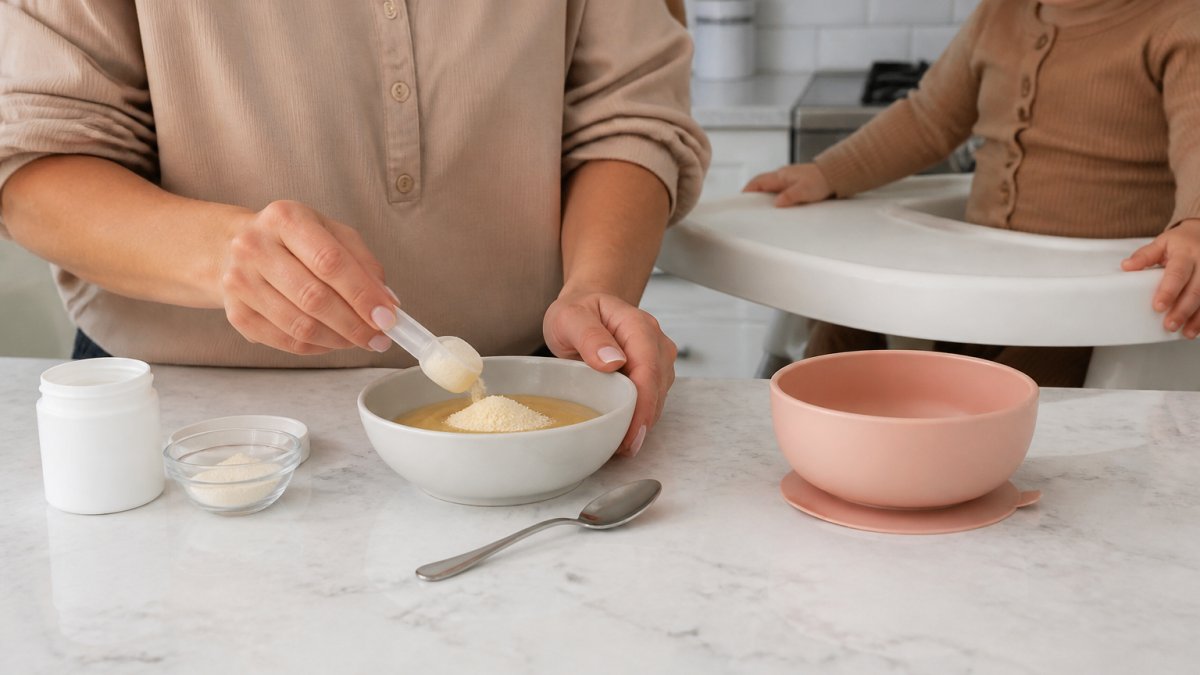
Toddler-specific strategies (ages 2-5)
Toddlers have developing taste preferences and are often more willing to accept mixed foods if the texture remains unchanged.
Applesauce is the gold standard for toddlers. Mix powder in first, stir 10 seconds, then add applesauce on top. Serve immediately to prevent separation.
Nut and seed butters are effective for toddlers who can chew safely. Mix powder in first, then spread on soft bread or crackers.
Mashed fruits and vegetables work for texture-sensitive toddlers. Mashed banana, sweet potato, or pumpkin puree mask powder effectively.
Honey or maple syrup for toddlers over 12 months. Mix powder into honey, then drizzle over toast or oatmeal. Viscosity prevents separation.
Start with quarter-teaspoon amounts. A quarter teaspoon mixed into a full bowl is nearly undetectable.
School-aged strategies (ages 6-12)
School-aged children have more autonomy over food choices and are more likely to refuse if they suspect deception. The strategy shifts from hiding to negotiating.
Smoothies work better for school-aged kids. Blend with fruit, yogurt, and milk. Let your child help blend, involvement increases acceptance.
Chocolate milk masks probiotic taste effectively. Stir powder in thoroughly and serve cold.
Pasta sauce is a savory option for school-aged kids. Mix powder into warm tomato sauce, then toss with pasta.
Oatmeal with mix-ins works if your child already eats it. Stir powder into warm oatmeal, then add toppings.
Negotiate transparency with older school-aged kids (ages 9-12). Explain the powder helps their tummy and immune system. Let them choose which food to mix it into.
Sensory-friendly delivery for texture-averse children
Cold foods mask texture better than warm foods. Cold temperatures numb the palate, reducing texture perception.
Avoid foods that change consistency when mixed. Test texture before serving, if consistency changes, that food won't work.
Purees and smooth foods are safest. Applesauce, yogurt, pudding, and mashed fruits hide powder best.
Temperature-neutral options for children with temperature sensitivities. Room-temperature applesauce or pudding works better than cold yogurt.
Mix into foods they already eat every single day. Stick with one food for at least two weeks before introducing alternatives.
Start with microscopic amounts. One-eighth teaspoon mixed into a full bowl is nearly impossible to detect.
Watch for behavioral cues, not just refusal. Slower eating, longer chewing, or grimacing signal texture change. Reduce amount or switch foods.
Food-Based Probiotic Sources for Picky Eaters
Fermented foods are natural probiotic sources: plain yogurt, kefir, sauerkraut, kimchi, miso, tempeh, and kombucha.
Most picky eaters reject these foods, sauerkraut is sour, kimchi is spicy, miso is salty.
Non-dairy alternatives exist: coconut yogurt, oat milk yogurt, dairy-free kefir, and fermented vegetable broths. Many picky eaters still reject them.
Prebiotic fiber feeds existing bacteria. Bananas, oats, garlic, and onions contain prebiotics that support gut health.
Most picky eaters won't eat enough fermented foods for meaningful probiotic amounts. Supplementation fills the gap.
Troubleshooting Negative Reactions and Building the Habit
Most parents quit probiotics prematurely because they don't understand normal adjustment. Troubleshooting keeps you moving forward.
Common reactions and how to respond
Bloating or gas in the first 3-7 days is normal adjustment. New bacteria produce gas as a byproduct. Most children experience mild bloating that resolves within a week.
Loose stools are common. If one or two loose stools occur then resolve, continue the probiotic. If loose stools persist beyond day 5, reduce the dose. If actual diarrhea develops, pause and contact your pediatrician.
Increased appetite or thirst sometimes occurs. A healthier gut improves nutrient absorption. This is not a reason to stop.
Behavioral changes like irritability or hyperactivity can happen. Usually resolve within 3-5 days. If they persist beyond one week, pause and discuss with your pediatrician.
Rashes or itching are rare but possible. Stop immediately and contact your pediatrician. Do not restart without medical guidance.
The biggest barrier: refusal after one negative experience
Separate the probiotic from the food. If your child had bloating after applesauce, they may refuse applesauce entirely. Switch to a different food immediately to break the negative association.
Reframe the narrative with your child. Explain: "Your tummy was adjusting to the good bacteria. That's normal." Use "helper bacteria" or "tummy helpers" instead of "medicine."
Wait 3-5 days before reintroducing. This prevents refusal from becoming a habit.
For toddlers, use a completely different delivery method. Switch to yogurt or nut butter to reset their expectation.
For school-aged children, involve them in choosing the new food. Autonomy increases willingness to try again.
Age-specific strategies for building the habit
Toddlers (ages 2-5): Consistency and routine. Serve at the same time daily in the same bowl. After two weeks, the habit becomes automatic.
School-aged children (ages 6-8): Gamification and rewards. Create a sticker chart. After 10 stickers, earn a small reward.
Older school-aged children (ages 9-12): Education and autonomy. Explain how probiotics help immunity, energy, and digestion. Let them choose the food and set reminders.
Timeline expectations
Week 1: Expect mild bloating, gas, or loose stools. This is normal. Do not stop.
Week 2-3: Most side effects resolve. The habit becomes routine.
Week 4-6: Health improvements become noticeable, more energy, fewer tummy aches, fewer colds, clearer skin.
Month 2+: The habit is solid with consistent health benefits.
Tracking progress to stay motivated
Keep a simple log: Note date, dose, food, energy level (1-10), digestive comfort, and illness. After four weeks, patterns emerge: fewer sick days, better energy, fewer digestive complaints.
Take a baseline photo. If your child has eczema or skin issues, compare before and after photos after six weeks.
Note behavioral changes. Less crankiness, better focus, and better sleep are often the first improvements.
Celebrate small wins. When your child takes the probiotic without complaint, that's a win. When they go a week without a cold, that's a win. When their energy improves, that's a win. Small wins add up to big health changes.
When to pause and reassess
Pause if side effects worsen after day 7. If bloating, loose stools, or behavioral changes get worse instead of better, the dose is too high or the strain isn't right for your child.
Pause if your child develops a fever or severe symptoms. Probiotics are not treatment for acute illness.
Pause if your child has a documented allergy. If your child is allergic to dairy and you're using a dairy-based probiotic, stop immediately. If they're allergic to soy and the probiotic contains soy, stop.
Don't pause just because of refusal. Refusal is behavioral, not medical. Switch the delivery method and try again. Refusal is not a reason to stop; it's a reason to problem-solve.
Frequently Asked Questions
How can I hide probiotics in my child's food without them noticing?
A tasteless probiotic powder dissolves best in foods with strong flavors or creamy textures—applesauce, yogurt, nut butter, or smoothies mask it completely. Mix it in just before serving to prevent settling, and avoid heating, which can reduce beneficial bacteria viability. Start with small amounts in foods your child already loves, then gradually increase once they're comfortable. For texture-sensitive kids, powders that dissolve fully work better than gritty options.
What is the best time to give probiotics to kids?
Give probiotics with or just before a meal containing fat or fiber, which helps them survive stomach acid and reach the gut. Morning or evening routines work equally well—consistency matters more than timing. Avoid giving them on an empty stomach or with very hot foods or drinks, which can reduce their effectiveness. Pick whichever meal fits naturally into your family's routine so you don't forget.
How do I know if my child needs a probiotic?
Signs include frequent digestive discomfort, constipation, bloating, or loose stools lasting more than a few weeks. Kids recovering from antibiotics, those with restricted diets, or children with sensory-driven food aversions may also benefit from supplementation. If your child has been evaluated by a pediatrician and shows these patterns, a probiotic can support gut microbiome recovery and digestive health. Always consult your pediatrician before starting any supplement.
Can probiotics cause my child to become fussy or resistant to eating?
Probiotics rarely cause fussiness, but some children experience mild bloating, gas, or changes in bowel habits during the first week as their gut microbiome adjusts. This typically resolves within 3-5 days. If your child shows persistent resistance or discomfort, reduce the dose temporarily, then increase slowly—a practice called dosage titration. If symptoms continue, stop and speak with your pediatrician. Most children adapt well once their digestive system adjusts.



Leave a comment
This site is protected by hCaptcha and the hCaptcha Privacy Policy and Terms of Service apply.