
Table of Contents
- Why Families Look for a Garden of Life Alternative for Kids
- What to Compare Before You Switch: A Side-by-Side Framework
- Garden of Life vs. Nature Made Kids Vitamins: What the Labels Tell You
- The Best Multivitamin for Kids Is One Your Child Will Actually Take
- What a Clean Multivitamin for Kids Should Leave Out
- Dye-Free Vitamin Alternatives for Kids: Formats, Flavors, and Age Guidance
- Whole-Food Powder vs. Gummies: A Transparent Price and Value Comparison
- How Tiny Wins Fits Into a Daily Routine for Picky Eaters
- Frequently Asked Questions
Last Updated: October 17, 2026
Why Families Look for a Garden of Life Alternative for Kids
A Garden of Life alternative for kids usually comes up for one of two reasons: the texture fight, or the label question. This guide covers both, plus the framework we would use before switching brands.
Many parents describe the same pattern: a child takes one look at a gummy, a chewable, or a powder and refuses it outright. The supplement sits in the pantry, and the mealtime battle costs more than the vitamin ever did.
Texture, taste, and mealtime resistance
Texture is the most common dealbreaker, and it rarely shows up in marketing copy. A sticky gummy, a chalky chewable, or a gritty powder can end a supplement routine on day one.
Children with sensory sensitivities notice small differences adults filter out. Mixing a new powder into a favorite food at full strength risks the child rejecting that food too, costing you a safe food along with the supplement.
Label transparency and third-party testing
The second reason families look for an alternative comes down to paperwork. "Third-party tested" appears on many children's supplement labels, but the phrase covers many practices. Some brands publish certificates of analysis; others state the claim and stop there.
When you compare labels, look for the specific contaminants named (heavy metals, microbes, solvents), not just the phrase. A label that tells you what was tested beats one that tells you testing happened.
What to Compare Before You Switch: A Side-by-Side Framework
Before you switch brands, compare five things: format, nutrient dose per serving, ingredient list length, testing disclosure, and cost per serving. Most families weigh format and cost first, then discover the other three matter more after the first month.
Here is the framework we would use:
| What to compare | Why it matters | What to look for |
|---|---|---|
| Format | Determines whether your child will actually take it | Gummy, chewable, powder, or liquid |
| Dose per serving | Shows whether one serving covers a meaningful share of daily needs | Percentage of Daily Value per serving |
| Ingredient list | Reveals fillers, dyes, and added sugar | Short list, named sources, no artificial colors |
| Testing disclosure | Tells you what was checked and by whom | Named contaminants, published results |
| Cost per serving | Makes brands comparable at a glance | Total price divided by servings per container |
That last row is the one parents skip. A larger bottle at a higher price can be cheaper per serving, and a small bottle at a low price can be the most expensive per day.
Garden of Life vs. Nature Made Kids Vitamins: What the Labels Tell You
Most comparisons of these two brands stop at positioning: one leans whole-food, the other mainstream retail. That is not actionable for a parent. The useful version is a label-level walkthrough, because the two brands make different trade-offs and neither is universally better.
Here are the label fields to pull up on each product page before you decide.
Pull these five fields from each label
- Serving size and servings per container. A gummy serving is often two gummies; a powder serving is often one scoop. Without normalizing to a single serving, every downstream comparison is wrong.
- Vitamin and mineral amounts, not just percentages. Look for the actual microgram or milligram amount next to the % Daily Value. Children's % Daily Value is set against age-specific reference intakes, so 100% on a 4-year-old's label is not the same target as 100% on a 12-year-old's.
- Nutrient form. Vitamin D as D3 versus D2, folate as methylfolate versus folic acid, B12 as methylcobalamin versus cyanocobalamin, and iron as bisglycinate versus ferrous sulfate are different ingredients with different absorption profiles. The form is printed in the Supplement Facts panel, usually in parentheses after the nutrient name.
- Sweeteners and colors. Scan the "Other Ingredients" line for cane sugar, tapioca syrup, glucose syrup, sugar alcohols (sorbitol, xylitol, maltitol), and any color additive by name (annatto, turmeric, beet juice, or a synthetic dye such as Red 40 or Yellow 5).
- Allergen and diet statements. Look for a "Contains" line for milk, soy, wheat, egg, fish, shellfish, tree nuts, and peanut, plus any gluten-free, vegetarian, or non-GMO claim. A claim is only as good as the certification behind it, so check for a recognizable seal rather than a word in the marketing copy.
Where the two brands tend to diverge
A common pattern: the whole-food-positioned line emphasizes named fruit and vegetable powders and fewer synthetic extras, while the mainstream line emphasizes retail availability and a conventional nutrient panel. Those are real trade-offs, not a ranking.
What the labels will not tell you is what decides most switches: whether the format gets taken. If your child rejects sticky or chewy textures, moving between two gummy brands changes the label but not the outcome.
The format question the labels cannot answer
This is where a different format changes the equation. Tiny Wins makes a tasteless powder that blends into food your child already eats, so there is no new texture to accept and no new flavor to negotiate.

If you are comparing labels, do it with a pen: write down serving size, the three nutrients you care most about, the sweetener, and the allergen line for each candidate.
The Best Multivitamin for Kids Is One Your Child Will Actually Take
The best multivitamin for kids is the one that gets taken consistently, not the one with the longest ingredient list.
Parents often shop by nutrient panel: more vitamins, more minerals, more superfoods.
We built Tiny Wins around this exact problem.

Practical test: pick the format your child will accept on a Tuesday morning when you are running late. That is the one that survives.
What a Clean Multivitamin for Kids Should Leave Out
A clean multivitamin for kids should leave out artificial colors, added sugar, unnecessary fillers, and ingredients that exist only to make the product look appealing on a shelf.
Here is what we would scan for on any children's supplement label:
- Artificial dyes, often listed as Blue 1, Red 40, or Yellow 5
- Added sugars and sugar alcohols, which can upset small stomachs
- Fillers and flow agents that serve manufacturing, not nutrition
The American Academy of Pediatrics guidance on children's nutrition consistently points parents back to food first, with supplements filling gaps rather than replacing meals.
Tiny Wins Sweet Blend and Savory Blend are both made with real fruits and vegetables, contain no artificial ingredients or added sugar, and are safe for gluten-free lifestyles.

Dye-Free Vitamin Alternatives for Kids: Formats, Flavors, and Age Guidance
Dye-free vitamin alternatives for kids come in four main formats, and the right choice depends more on your child's age and eating habits than on the nutrient panel. Here is how they compare on what actually decides whether a supplement gets taken.
Format-by-format trade-offs
Gummies are the most accepted format for many children, but they are sticky, frequently sweetened with cane sugar or tapioca syrup, and often rely on a natural color source such as annatto, turmeric, or beet juice once synthetic dyes are removed.
Chewables avoid the sticky texture but can turn chalky, which some children reject.
Powders disappear into food entirely, which is the advantage for children with texture aversions.
Age guidance and safety considerations
Age is the first filter, not the last. Most children's supplements state a minimum age on the label, commonly ages 2 and up, and some gummy and chewable products carry a choking-hazard note for children under 3 or 4. Follow the label's age statement rather than scaling an adult dose down, because reference intakes and safe upper limits differ by age band.
A few safety points before you add any supplement:
- Iron is the one to watch. Iron-containing children's supplements are a leading cause of pediatric poisoning when a child gets into the bottle. Keep them out of reach and do not add iron unless a clinician has identified a need.
- Check for interactions. If your child takes a prescription medication, ask the prescriber or a pharmacist before adding a supplement, because some nutrients affect how drugs are absorbed.
- Do not stack products. A gummy multi plus a fortified cereal plus a flavored milk can add up to more of a nutrient than the label of any one product suggests.
What "dye-free" and "immune support" actually mean
Dye-free means no synthetic color additive is listed in the "Other Ingredients" line; it does not mean the product is free of all color, since natural sources such as annatto, turmeric, and beet juice are still colors.
"Immune support" and "digestive health" are structure/function claims, not disease claims. They describe a role a nutrient plays in normal body function, and they are not pre-approved by the U.S. Food and Drug Administration the way a drug claim is.
Flavor and format in practice
Flavor matters less than you would expect in powder form. Our Sweet Blend is designed for yogurt, oatmeal, pancakes, smoothies, and applesauce. Savory Blend is designed for soups, sauces, and other savory favorites. Both deliver at least 50% of the Daily Value of key vitamins per scoop.
Whole-Food Powder vs. Gummies: A Transparent Price and Value Comparison
Whole-food powder and gummies are not priced the same way, which makes the comparison harder than it looks. A gummy bottle is priced per bottle.
Here is the transparent breakdown for our own products:
| Product | Price | Servings per container | Cost per serving | Best for |
|---|---|---|---|---|
| Sweet Blend | $49.95 | 60 | About $0.83 | Yogurt, oatmeal, smoothies, applesauce |
| Savory Blend | $49.95 | 60 | About $0.83 | Soups, sauces, savory meals |
| Sweet & Savory Combo | $89.90 | 120 | About $0.75 | Families covering both sweet and savory meals |
The combo pack is the better value per serving and covers more meals.
That is the comparison parents ask about most: is a whole-food powder worth more than a gummy? If a gummy gets taken daily, it works.
How Tiny Wins Fits Into a Daily Routine for Picky Eaters
Fitting a supplement into a picky eater's routine takes one decision, not a new habit. Pick the meal your child eats most reliably, add one scoop, and stop there.
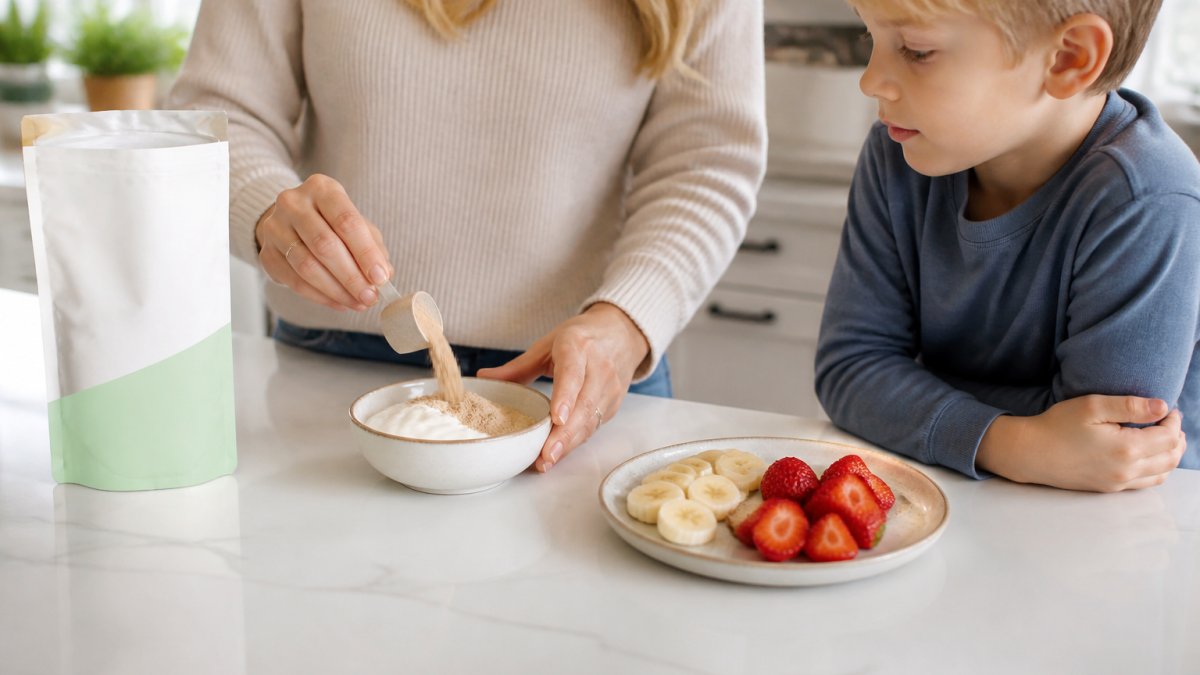
Our customers describe the same shift.
A few practical notes from parents who have done this:
- Start with the food your child eats most often
- Use a quarter scoop for the first few days
- Keep the bag somewhere you see it at that meal
Tiny Wins is recommended by 300+ physicians on FrontRowMD and used by 1.2k+ happy parents. Ingredients are recognized as GRAS by the FDA. Every purchase also supports autism awareness through a $1-per-sale donation.
Frequently Asked Questions
What is a good Garden of Life alternative for kids who refuse pills and gummies?
For children who resist chewables or gummies, a tasteless whole-food powder is the most practical swap. Tiny Wins makes two: the Sweet Blend and Savory Blend, each $49.95 for 60 servings. One scoop delivers at least 50% of the Daily Value of key vitamins and mixes into yogurt, oatmeal, applesauce, soups, or sauces without changing taste or texture. That matters for kids with sensory aversions, since the supplement disappears into food they already accept rather than asking them to try something new.
Which is better for kids, Garden of Life or Nature Made?
They solve different problems. Garden of Life leans on whole-food and organic positioning, while Nature Made is widely available and typically cheaper per bottle. Neither is automatically better; what decides it is format and label fit. Check the serving size, whether the formula is dye-free, whether it is third-party tested, and whether your child will actually take it. A clean multivitamin for kids that sits uneaten in the pantry delivers no nutrients at all, so acceptance should carry real weight in the decision.
Are dye-free vitamins available for kids?
Yes. Dye-free options exist across gummies, chewables, liquids, and powders, though you have to read the ingredient list rather than trust the front of the bottle. Synthetic colors often appear as numbered dyes, so scan the full panel. Powder formats sidestep the issue entirely because there is no candy shell or gummy base to color. If dyes are your main reason for switching, a whole-food powder blended into food is the simplest route to a dye-free daily supplement.
How do I compare price per serving between kids vitamins?
Divide the total price by the number of servings in the container, not the number of gummies. Tiny Wins Sweet Blend and Savory Blend are $49.95 for 60 servings, which works out to about $0.83 per serving; the Sweet and Savory combo is $89.90 for 120 total servings. Do the same math on any gummy bottle you are considering, then weigh it against what the label actually delivers. A cheaper bottle your child refuses is the most expensive option on the shelf.
How do I know a children's supplement is actually third-party tested?
Look for a specific claim naming what was tested, such as purity, heavy metals, and microbes, rather than a vague badge. Tiny Wins states its products are third-party tested for purity, heavy metals, and microbes, and that its ingredients are recognized as GRAS by the FDA. Ask any brand which lab performs the testing and whether certificates are available on request. A brand that can answer that question directly is giving you more to work with than one that only repeats the phrase on its website.
If mealtime battles have turned supplement shopping into another chore, the problem is usually the format, not the nutrient panel. Tiny Wins makes tasteless Sweet and Savory blends that mix into food your child already loves, with real fruits and vegetables, no artificial ingredients, and third-party testing for purity, heavy metals, and microbes. Choose your Blend and add one scoop to a meal that is already on the plate.


Leave a comment
This site is protected by hCaptcha and the hCaptcha Privacy Policy and Terms of Service apply.